After watching both the seasons with 5 episodes each I liked 3 among the 10. In season 1 first episode Phoringer Bou by Arka Ganguly was simple yet so beautiful and the innocence of the love story was it’s USP I would say. The second episode of season 1 Gopone Prem Charan by Suman Mukhopadhyay was worth watching only because of Anirban Bhattacharya (Hoichoi er alu 😅 sob Sabji Te Alpo Kore die dey) he was amazingly spontaneous and fun to watch!! And last but not the least rather the best of the lot for me was episode 3 of season 2 Praay Kafka by Chandril Bhattacharya cause it has nailed it in every department from acting to direction especially the inner message was just ♥ so subtle yet so beautiful!! Rest of the episodes in both the seasons weren’t up to the mark at all!!
The beauty of this movie was that the whole movie was executed through symbolisms and metaphors. A lot of deep stuffs has been depicted through these symbolisms and metaphors. Splendid job done by the whole cast I’m literally blown away by watching the depth in the performance of Sanjay Mishra!! Hats off to Rajat Kapoor for such a creation.
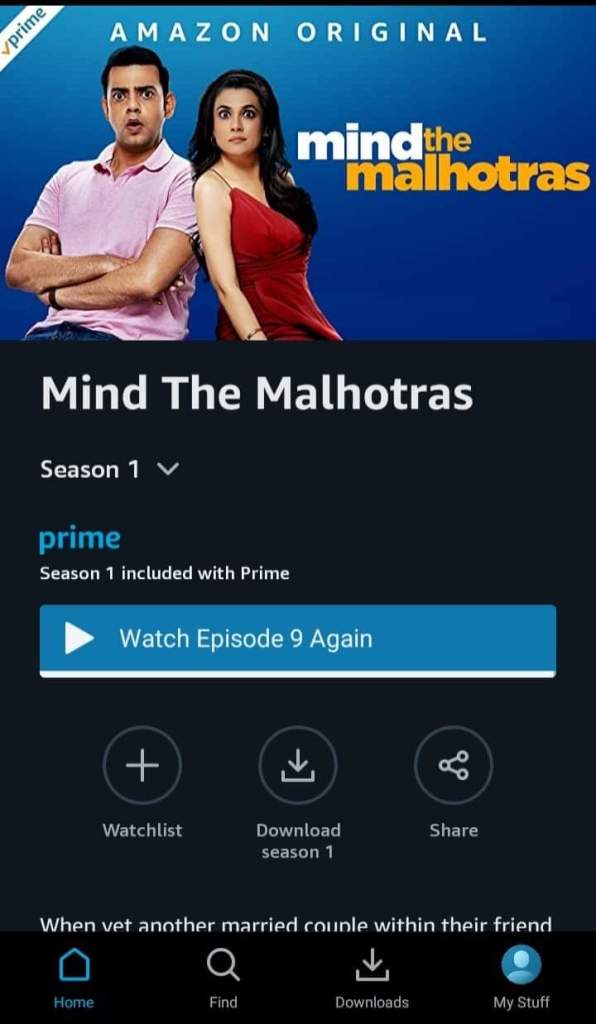
If watching something light hearted is the intention then it’s a good choice. Though it’s a one time watch but Cyrus Sahukar and Mini Mathur are worth the watch. Also, Denzil Smith is exceptionally noticeable. The series is hilarious in parts but tends to get a bit slow and monotonous. Definitely not of cracking up funny level but moderately funny and in few parts extremely hilarious.
Bhaukaal to the power infinity it was!! 🔥All the loose ends of season 1 has been brilliantly sewed up in season 2. Also, this time the emotional angles are very well established. Just like last season this season too Ali Fazl is the show stealer for me! Guddu Pandit ♥️ Acting of the whole cast and crew was TERRIFIC af. But one thing should be definitely mentioned that is Divyendu Sharma has done a great job in this season cause I personally felt he was kind of a weakling in season 1 but in this season he has nailed it as we finally get to see another side of Munna Tripathi other than violence and understand the character’s depth . Great direction and execution. Looking forward to many more seasons ahead 🤩
Can’t even comment on the acting part I haven’t reached that level yet don’t know if I will ever reach or not. But it was so damn terrific!! As days are passing by Amitabh Bachchan is proving that age is just a number! What terrific acting 🔥 Not even for a second did I feel like I was watching “the” Amitabh Bachchan. He was completely Mirza rather Mirza was him . Also, sharing the screen with such a legend and still shining is what Ayushman Khurana did. Hats off just!! Concept, symbolism and subtle use of satire was absolutely on point. But when it’s a Shoojit Sircar film you expect more at least I do and this time I’m slightly dissapointed as midway through the film it kinda felt a bit prolonged and lost track in between and hence somehow felt boring , could have been more crisp I guess if better execution happened.
Concept was good but execution was shitty af ! Except for the lead actress Amruta Khanvilkar and a few actors the rest of the supporting cast looked quite amateurish . It could have been a really off beat unique piece of work but remained as a cringe content mostly.
So 4th season is the weakest and worst of all the 5 and the 5th season is the best over all. Couldn’t take my eyes off Anirban Bhattacharya 😍But Ridhima Ghosh is a dissapointment also Suprobhat Das has done a great job in Ajit’s character as compared to Subrata Dutta who was an absolute let down. I feel the franchise should stick to Soumik Halder as director cause he’s the only one who gave the best shape to the series compared to other directors of the first four seasons. But the best reason to watch this series is hands down Anirban Bhattacharya ♥️
Amazing 🔥Capable enough to blow away minds !! Such strong and natural acting by everyone in the cast and Dr Sigmund Freud is just so hot apart from the beautiful acting of course 😍🤤 Oshadharon direction it’s like a beautiful journey of exploring human psychology and it’s depths especially our carnal side and desires…..
When it came to the subject of cinema, in the ’60s and the ’70s, through a series of internationally acclaimed films, Satyajit Ray had secured India’s position in the world map a feat unmatched by anyone before him. And he had done so while working in the Bengali film industry. It is not surprising, then, that time and again, Ray had had to field the one question which everyone in Mumbai ended up asking him — when would he make a feature film in Hindi? From various books written on the subject, and from recently published letters, we get to know that the thought of making a Hindi film did cross Ray’s mind several times, but that he was taking his time, for three principal reasons i.e. his rather limited knowledge of the languages of Hindi and Urdu , the fact that for their livelihood his crew members in Bengal depended on his films, and because he hadn’t found a suitable subject yet. Eventually, he did find the subject though, in a short story written by Munshi Premchand. In 1977, supported by his old crew and a new team of translators, Ray took the big leap, and made his first Hindi feature film — Shatranj Ke Khilari (The Chess Players) which went on to become a landmark film in the history of Hindi cinema.
There are few films in Bollywood that have truly stood the test of time. And while there are many cult classics from each decade of cinema, there are only a handful of films that are timeless. Cine maestro Satyajit Ray’s first Hindi film, Shatranj Ke Khilari, released in 1977 falls in that category.
“The Chess Players” is set in Lucknow, India 1856. Two chess-obsessed noblemen, Mir and Mirza , meet everyday to indulge in their passion. In doing so they ignore, and are indifferent to the upheaval that surrounds them. At the same time, the King of Oudh, so wrapped up in his own creative pursuits, neglects his state duties. This results in an assertion of British rule and a demand that he abdicate.
The biggest asset of Shatranj Ke Khilari is its world-building. Watching the film, it is impossible to believe that it had been directed by someone who, by his own admission, had very limited working knowledge of Hindi and almost no knowledge of Urdu or Awadhi. And that’s just the dialogues. Shatranj transports us into a magical world of nawabs and nautch girls, of palaces and forts, of hookahs and Peshawari shawls, of cockfights and kite-flying contests, of kathak and thumris all with its beautiful cinematography, perfect art direction, immaculate lighting and hundreds of knick-knacks and props, most of which Ray had carefully handpicked by himself . The film itself is extremely riveting, denying viewers even the slightest opportunity to take their eyes off the screen. Every single frame of the film is like a painting, the colours deliberately muted, to make the picture reminiscent of a bygone era. There is a certain mellow feeling throughout the film, primarily brought on by the hues used. One gets a sense of tragedy looming large, even when the characters aren’t speaking or emoting. To add to these, of course, are some of the best performances ever assayed on screen in a Hindi film.
Sanjeev Kumar and Syed Jaffrey play the two noblemen whose love for chess knows no bounds not even the ones imposed by family. While Syed Jaffrey is the warm, jolly and courteous simpleton oblivious of the fact that his wife is having an affair behind his back, Sanjeev Kumar is the more aggressive of the two friends, both on and off the chessboard. Amjad Khan plays Wajid Ali Shah with great sensitivity, showing once again his stature as an actor. The Nawab of Awadh, thanks to his softer inclinations, literally gives up his crown without the British army having to shed a single drop of blood. On hearing that the British are coming to overthrow him, when his prime minister breaks down, Wajid Ali Shah remarks — ‘Only music and poetry can bring tears to a man’s eyes’. His long speech to his ministers upon hearing of Outram’s plans is the stuff of cinematic legend, fraught with a mix of angst and defiance, and of tragedy that he would no longer be able to indulge himself with the things that gave him the greatest pleasure.
Ray, gave us a film that rings true in all political climates and societies – whether feudalist or democratic. Shatranj Ke Khiladi keeps reminding us that in our daily petty politics, we miss the wood for the trees. The film, made during Indira Gandhi’s Emergency period, poses difficult political questions: Can the nobility indulge in the arts while there is a financial and political crisis in their kingdom? Can art and craft be redeeming factors when all else is lost? Should we feel sympathetic for the kohl-eyed Nawab losing his kingdom? And would that be nationalistic?
Ray’s historical drama offers a vision of a troubled India steeped in apathy. The film is implicitly political and Ray’s subtle use of chess as a metaphor parallels the cunning moves by the British to capture the King. While the two men play, their marriages disintegrate. These images are juxtaposed with those of the King who, while flying kites, has one of his poems skilfully dissected by General Outram , thus providing grounds for annexation.
All of Premchand’s stories have one thing in common — revealing the innermost, the ugliest, and the most interesting parts of human nature. Perhaps that is why Satyajit Ray was so taken by the story cause he does the same with his films. He expertly juxtaposes the noblemen struggling to play their game of chess in peace, with the game that the Governor General of British India plays with the Shah for his kingdom. There are no heroes or villains in the film. The story of either is not black and white, and the grey tones are shown in subtle yet perfectly dramatic light, matching the colour-schemes and the simple aesthetics of the cinematography. Shatranj Ke Khilari was Satyajit Ray’s most expensive film.
Satyajit Ray is not called one of the greatest filmmakers of the 20th century simply for beautiful films. His use of space and silences is so masterful that a viewer (even an impatient one in 2019) is hooked from the start, oblivious to the what might otherwise be considered “long, boring stretches of film”. His attention to detail right from the hand gestures and accents to the clothes and sets is remarkable and transports you to the era.
Premchand ends the story with Mirza and Meer killing each other with swords in a quarrel over the game. “These are the same heroes who, living, never shed a tear over the tragic fall of their sovereign; they are now happily dead, defending the honour of their chess vizier” – Premchand wrote in his story . In the film, this finish would have appeared melodramatic. Ray changed it and left it open-ended. According to him, “The idea of two friends killing each other was abandoned because I felt it might be taken to symbolise the end of decadence.” The game goes on.
One would imagine that in a film about chess, it would be difficult to believably portray the passage of time on screen. But in Ray’s able hands, such fears are brushed aside and what transpires on screen is indeed poetry in motion. Shatranj Ke Khilari is one of those rare films which make you realise, even without any background information whatsoever, that the makers must have made it with a lot of heart. Ray’s skillful tackling of the subject and his adaptation of Premchand’s short story into a full-fledged politico-historical film, an important commentary of the systematic atrocities of the British in India, is a tragic tale, one that will be lauded by generations to come.
As you fume and laugh over the stupidity and ignorance of the protagonists, Satyajit Ray and Premchand’s masterstroke sneaks up on you — that you, dear viewer, are also that chess player. So, absorbed in our daily lives that we barely look up to see the larger picture, be it the people governing us or the way we’re ruining the planet. But once again, we shrug it off and move on to the next round.




 Rajrupa Das 3rd Sem (Blog Assignment)