It’s actually weird how I get a new perspective and information every time I have watched this film till now. Like for example, the use of Bhagwan Dada’s song, O Beta Ji, from perhaps the biggest hit of his career, Albela. After a bit of research I got to know the actor found immense fame and wealth after the film, a 25-room sea-facing bungalow in Juhu, Mumbai, and a fleet of fancy cars. And then, as it happens in life and tragedies, he lost it all. The man who lived so lavishly spent his last days in a dingy chawl, doing bit roles in films, forsaken by his famous friends. Anurag Basu uses the song many times in Ludo, to underline how fate is a cruel mistress. With word and in spirit, the song becomes a part of the metaphor that Ludo is intended to be. It is a strange metaphor to pick when your story is weighing good and evil, and cause and effect while throwing chaos theory in the mix by way of mythology.
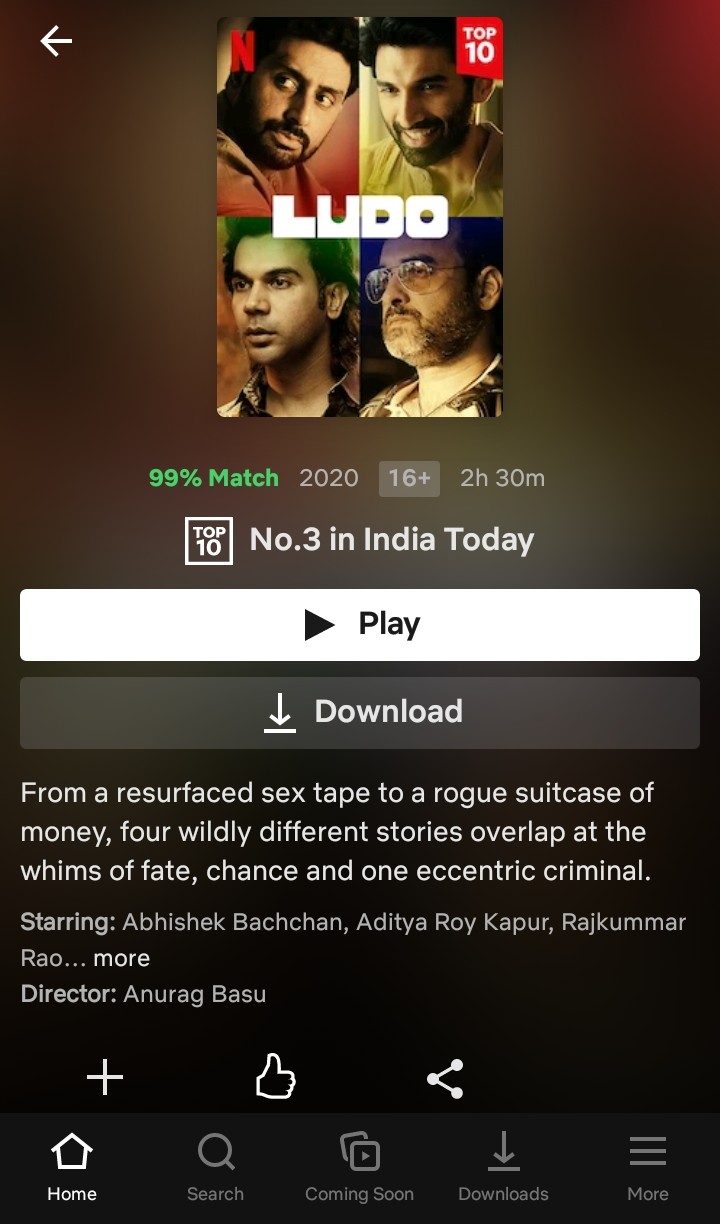
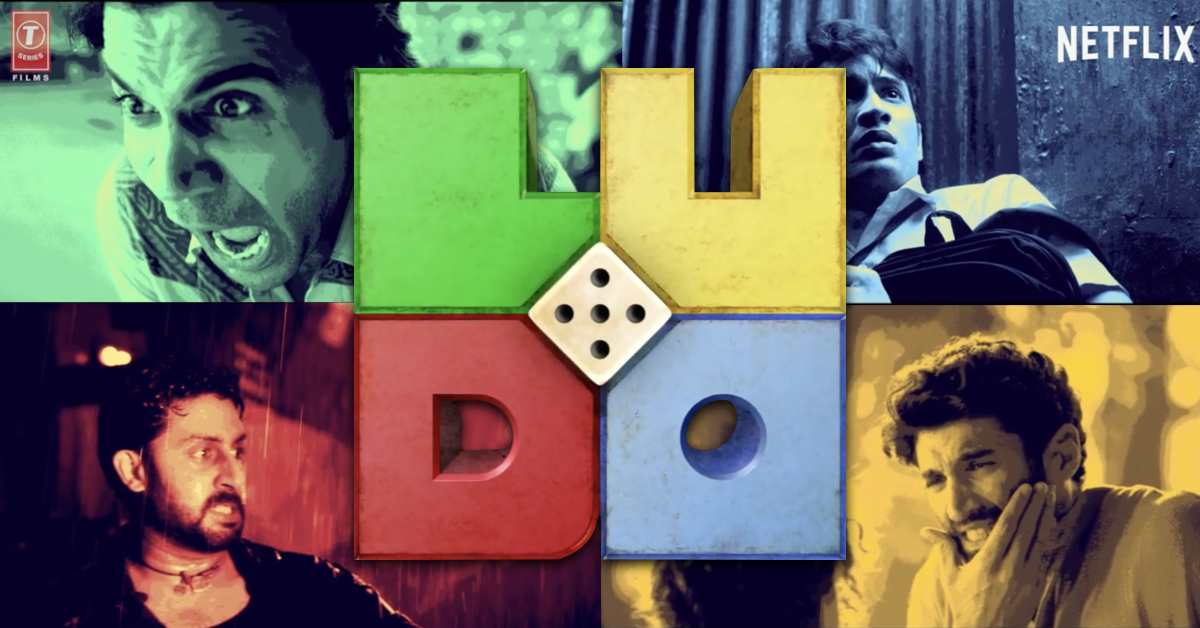
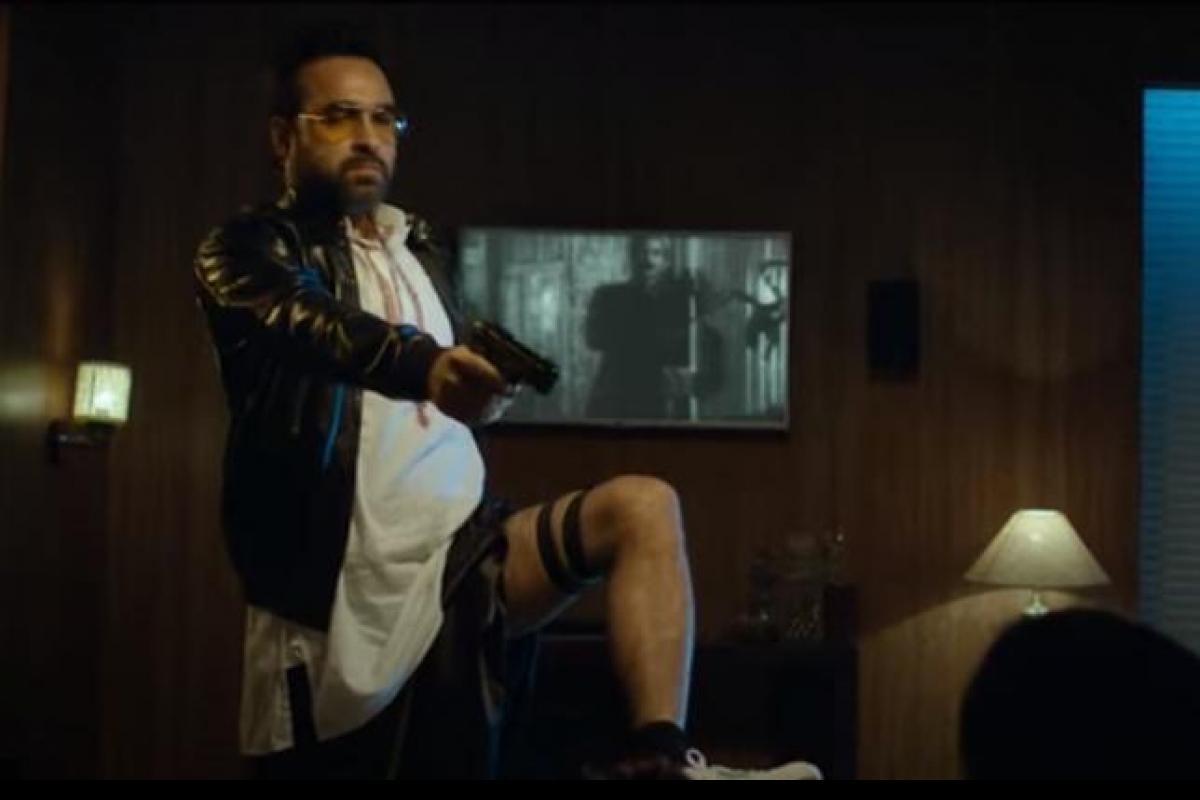
Ludo, despite its missteps, keeps it breezy, with its cast helping it to stay the course. It explores the idea how our lives form a chain of action and reaction, often a random act defining our course. I found the idea of Ludo metaphor extremely interesting, where all characters signify the four colours of the game with Pankaj Tripathi’s character playing the dice, or the catalyst.
The best aspect of the film according to me is how Basu weaves in romance, drama, thrill, tragedy, whimsy and slice-of-life in one film, while keeping it essentially a black comedy. The world is whimsical and absurd, with a sharp joke around every corner, sometimes said “by” the characters, but mostly aimed “at” them. The black comedy genre is not one that Bollywood has often attempted, possibly because it is challenging as it is and made all the more so in a nation of thin skins. Ludo in its own way and in its own style offers unrelenting entertainment. Despite its 2.5 hours length, it does not flag, held together as it is by some nimble editing and Basu’s deft direction that introduce connections where none were evident, reveal already existing links in small increments at unexpected moments and occasionally opt for arbitrariness just for kicks.
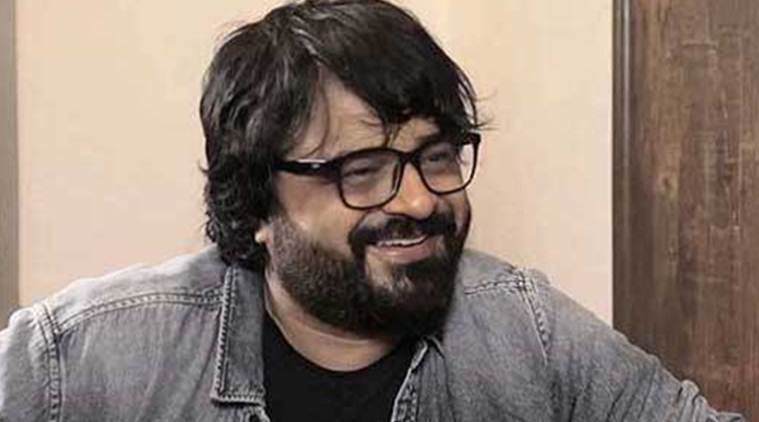
And the second best aspect of this film is the music by Pritam, which is soulful and very much refreshing. Har Dum Humdum and Aabad Barbaad stays with us long after the film is over.
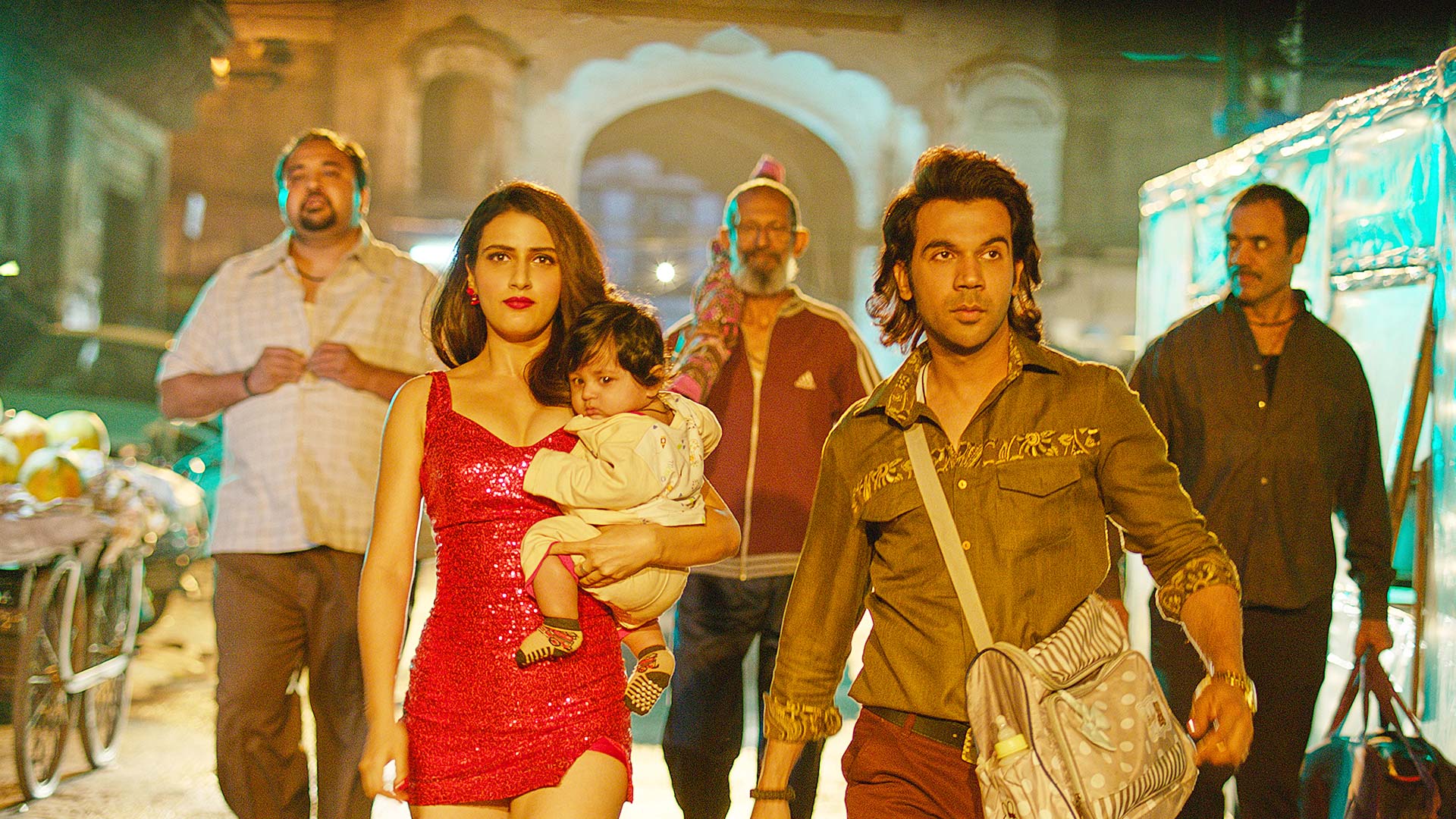
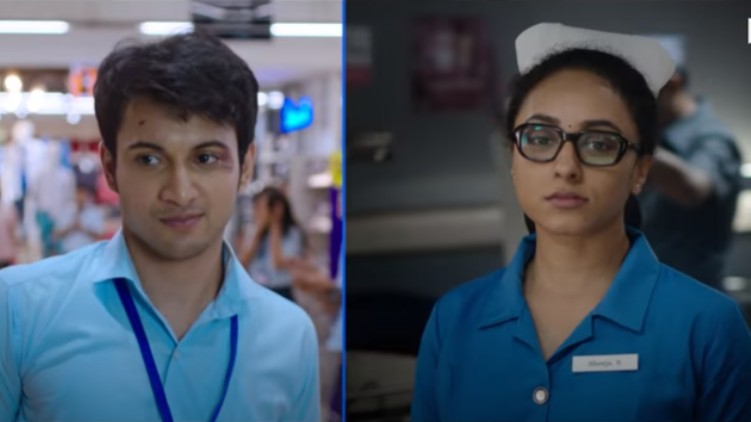
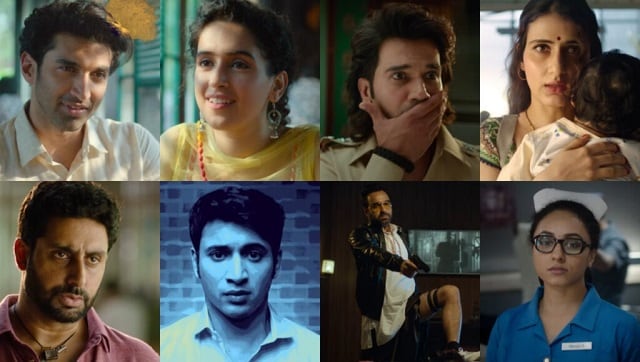
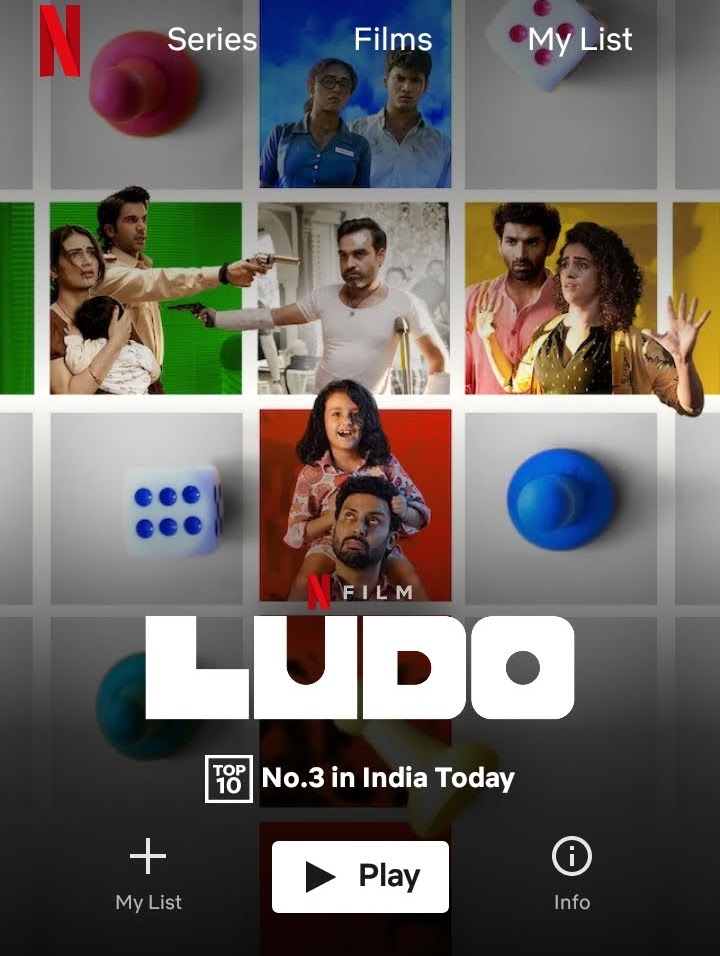
Basu manages to stir emotions at a primal level using colours, a device he has employed in his earlier films as well. Here, the characters are illustrated via the hues where, Abhishek’s red stands for anger and passion, Rajkummar and Fatima’s green signifies survival, Aditya and Sanya’s easy-going romance fits perfectly with the yellow while Rohit and Pearl Maaney’s blue portrays their childlike innocence.
The film may appear frothy, but beneath the bubbles manages to make a point about materialism, true love, parochialism and a news media perched on the lap of the establishment. Pinky and Shruti are not as well-written or acted with as much spark as the other characters, but their respective stories are well rounded off all the same. Not every point is taken to a logical conclusion, but as a sutradhar reminds us, there are no easy answers to life’s most complex questions.
In this interesting ensemble cast, not surprisingly Tripathi and Rao are a hoot as they display faultless comic timing for the nth time in their careers. Bachchan is likeable and shares a pleasant, warm equation with the lovable child actor Inayat Verma whose character crosses paths with him. Verma and Bachchan are this movie’s best pairing. Pearle Maaney, the Mollywood actor making her Bollywood debut here, pulls off the role without descending to the cringey “Madrasi” cliché that was once a Bollywood staple. Aditya Roy Kapur is as usual at his charming best. While Rohit Suresh Saraf cuts a cute picture. And last but not the least Shalini Vatsa who plays a fellow Malayali nurse, is absolutely hilarious and her chemistry with Pankaj Tripathi is very endearing.
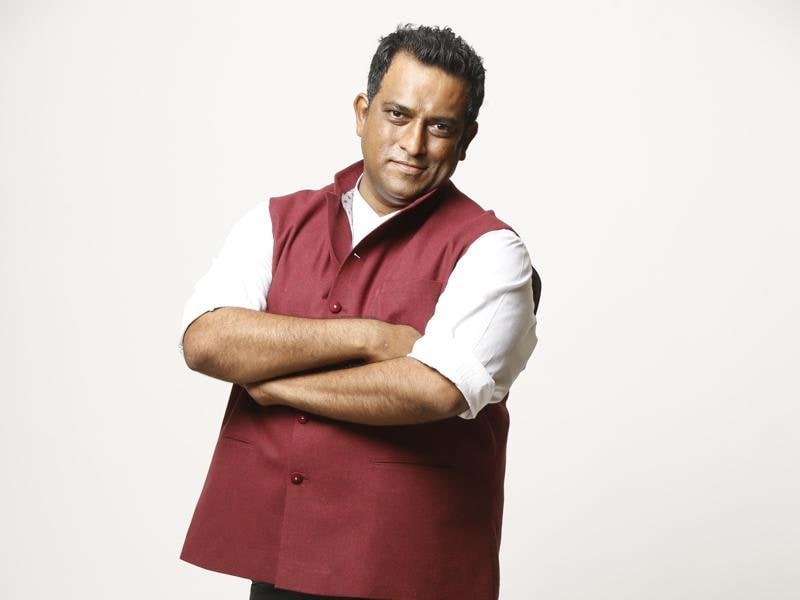
Basu, is a multi-tasker in this film. In addition to directing it and acting in it, he also shares a cinematography credit with Rajesh Kalra, is Ludo’s production designer, and has written the story and screenplay. You would think that the overwork would show, but quite to the contrary, he adeptly carries each department on his shoulders.
Ludo examines questions of virtue and vice, sin and goodness, heaven and hell, fate and punishment through intersecting lives. But, the film is good old-fashioned, light-hearted fun. Ludo strikes a fine balance between the naram hawa and garam hawa that passes through the lives of its multiple players. In his last film, Jagga Jasoos, Basu had held out the promise of whimsy but faltered in his execution. Ludo enters the same territory and quietly delivers on its promise.
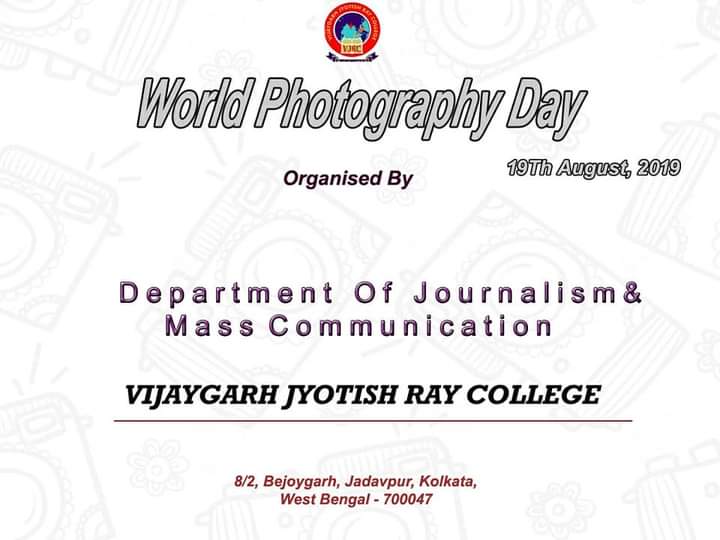
1. Date – 19.08.2019. Topic – World Photography Day (at Rabindra Sabha Griha, Vijaygarh Jyotish Ray College). Speakers – Dr. Rajyasri Neogy, Principal, Vijaygarh Jyotish Ray College, Dr. Arnab Kumar Banerjee, H. O. D, Dept. Journalism & Mass Communication, Vijaygarh Jyotish Ray College, Sunandit Chaudhury, Asst. Prof. Dept. Journalism & Mass Communication, Vijaygarh Jyotish Ray College, Bakul Srimany, Asst. Prof. Dept. Journalism & Mass Communication, Vijaygarh Jyotish Ray College.
2. Date – 06.09.2019. Topic – Environmental Problems in the Himalaya (at Prof. T.M. Das Memorial Lecture, Vijaygarh Jyotish Ray College). Speaker – Dwijendra Nath Banerjee.
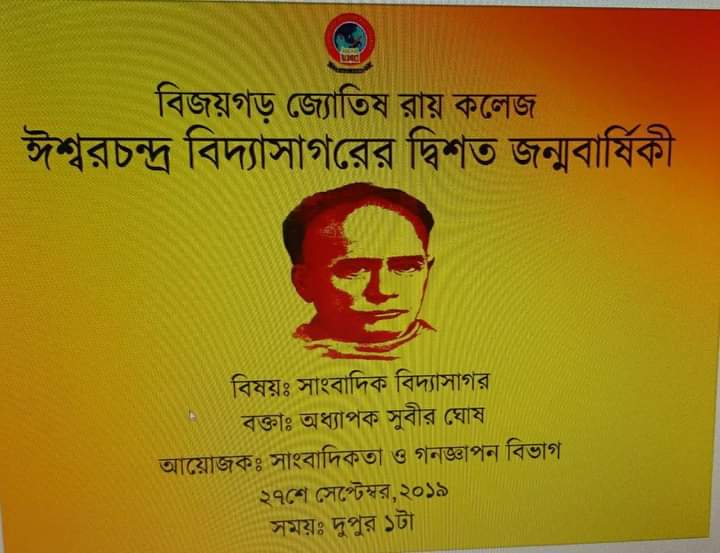
3. Date – 27.09.2019. Topic – Vidyasagar as a Journalist (at Vijaygarh Jyotish Ray College on 200 Years of Ishwar Chandra Vidyasagar Birth Centenary). Speaker – Prof. Subir Ghosh.
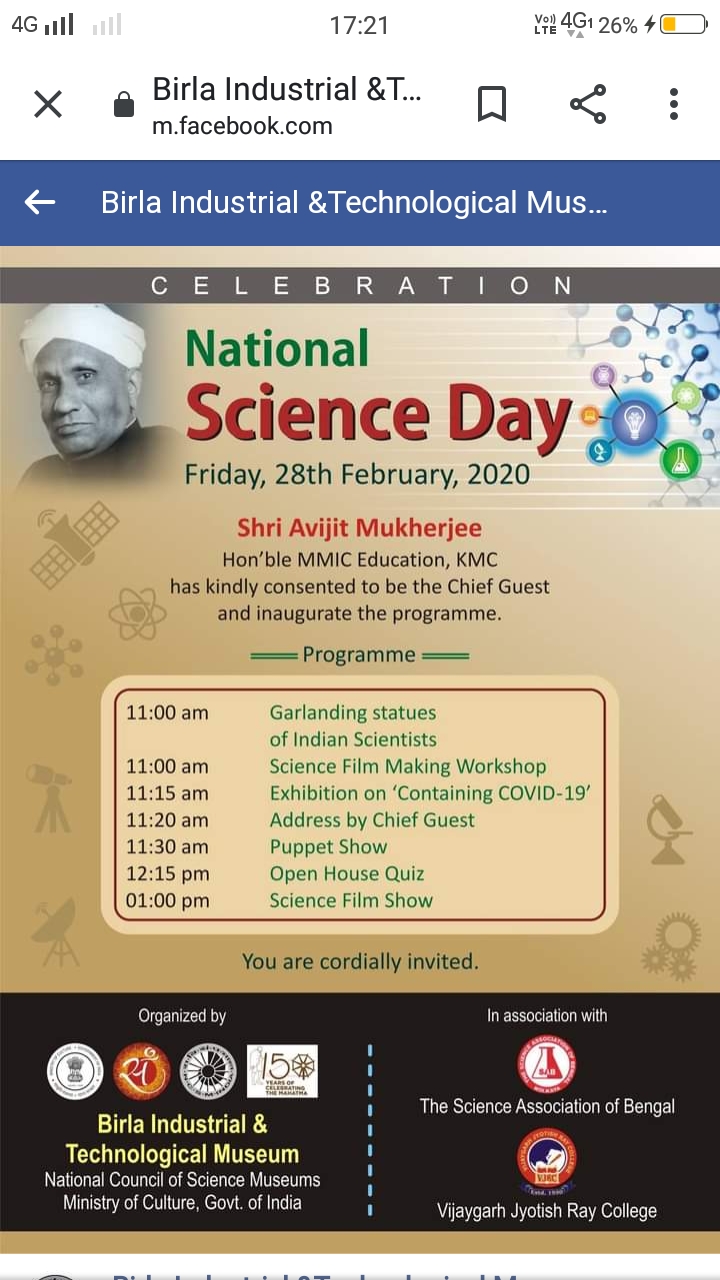
4. Date – 28.02.2020. Topic – National Science Day (at Birla Industrial & Technological Museum organised by Birla Industrial & Technological Museum in Collaboration with The Science Association of Bengal & Vijaygarh Jyotish Ray College). Speaker – Several.
5. Date – 05.06.2020. Topic – World Environment Day. Speaker – Dr. Arnab Kumar Banerjee, Science Communicator, H. O. D. Dept. Of Journalism and Mass Communication, Vijaygarh Jyotish Ray College.
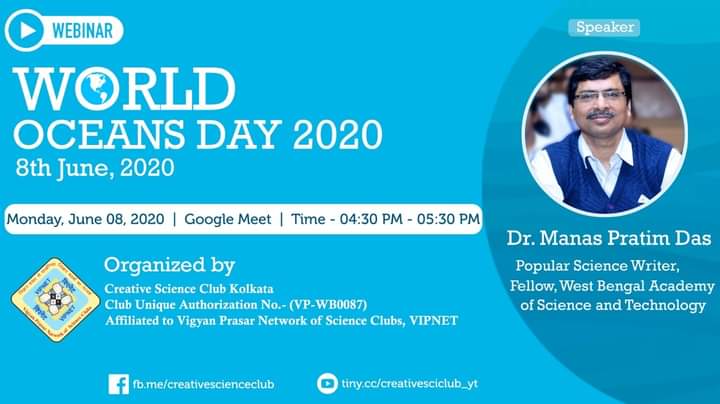
6. Date – 08.06.2020. Topic – World Oceans Day. Speaker – Dr. Manas Pratim Das, Popular Science Writer, Fellow, West Bengal Academy of Science and Technology.
7. Date – 19.06.2020. Topic – Tomorrow’s Habit. Speaker – Dr. Soma Basu, Psychologist, Germany. Dr. Subarna Kumar Das, Information Scientist. Dr. Manas Pratim Das Science Communicator. Dr. Siddhartha Narayan, Virologist. Dr. Debdoot Ghosh Thakur, Journalist. Susanta Chattopadhyay, Public Relation Officer. Dr. Subhransu Roy, Historian & Sports Researcher. Dr. Atanu Biswas, Doctor. Dr. Senjuti Roy Mukherjee, Actress. Dr. Abhijit Das, Economist. Dr. Rajyasri Neogy, Educationist.
8. Date – 02.07.2020. Topic – COVID-19: How America is Coping with the Pandemic. Speaker – Laura Ungar, Midwest Editor/Correspondent, Kaiser Health News, USA, Formerly with USA Today and The Courier Journal, also visiting faculty in University of Missouri.
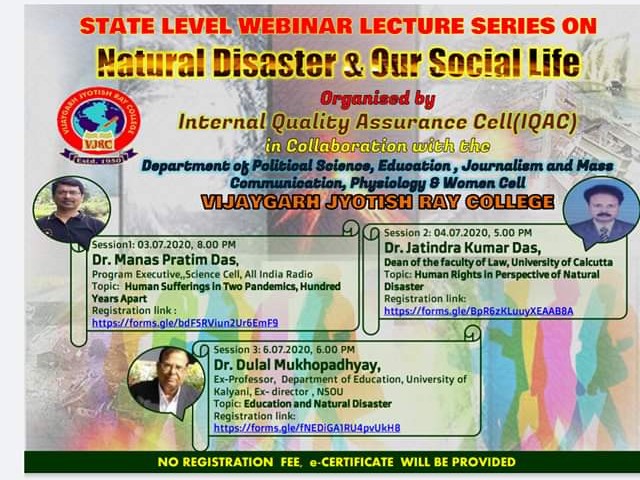
9. Date – 03.07.2020. Topic – Natural Disaster & our Social Life : Human Sufferings in Two Pandemics, Hundred Years Apart. Speaker – Dr. Manas Pratim Das, Program Executive,Science Cell, All India Radio.
10. Date – 04.07.2020. Topic – Natural Disaster & our Social Life : Human Rights in Perspective of Natural Disaster. Speaker – Dr. Jatindra Kumar Das, Dean of the Faculty of Law, University of Calcutta.
11. Date – 06.07.2020. Topic – Natural Disaster & our Social Life : Education & Natural Disaster. Speaker – Dr. Dulal Mukhopadhyay, Ex Prof. Dept. of Education, University of Kalyani, Ex Director of NSOU.
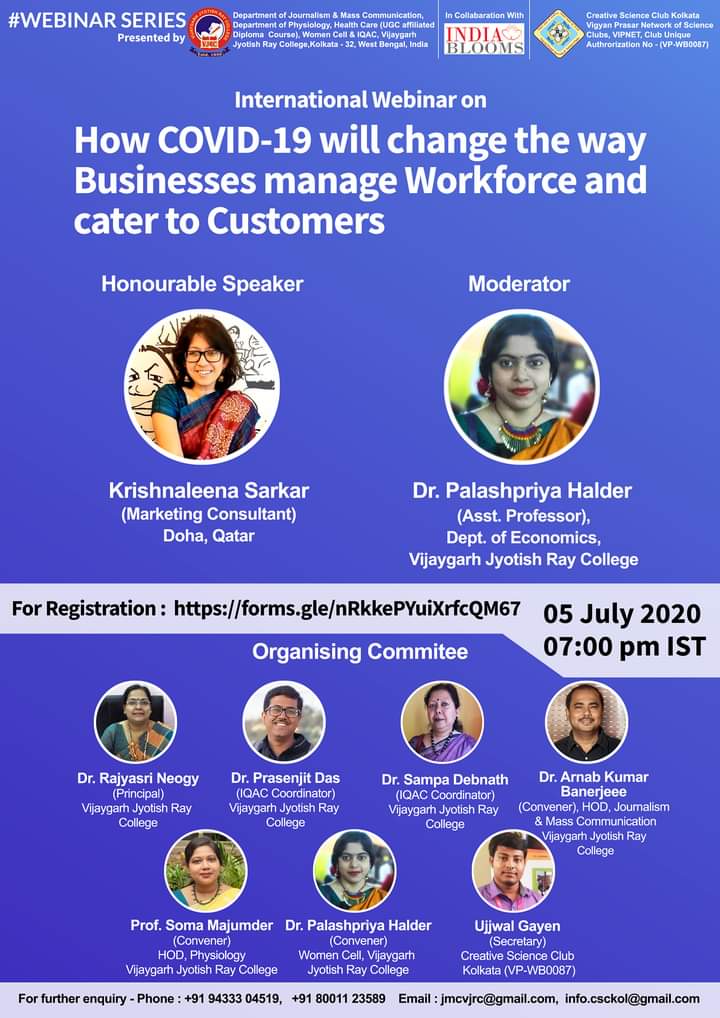
12. Date – 05.07.2020. Topic – How COVID-19 will change the way Businesses manage Workforce and cater to Customers. Speaker – Krishnaleena Sarkar, Marketing Consultant, Doha, Qatar.
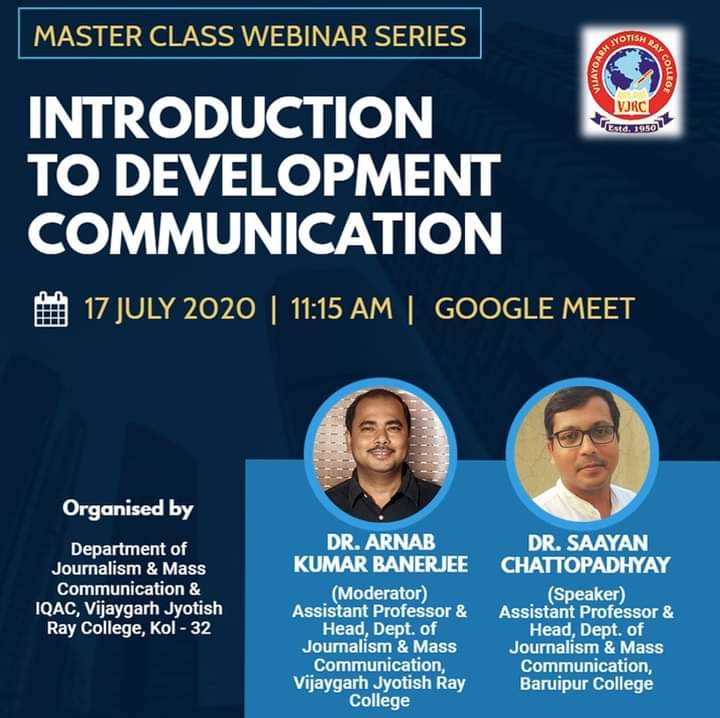
13. Date – 17.07.2020. Topic – Introduction To Development Communication. Speaker – Dr. Saayan Chattopadhyay, Assistant Professor & Head, Dept. of Journalism & Mass Communication, Baruipur College.
14. Date – 18.07.2020. Topic – News Agency And Its Significance in The Age Of Digital Media. Speaker – Soumyajit Majumder, Principal Copy Editor, Press Trust of India (PTI).
15. Date – 20.07.2020. Topic – Communication And Development Paradigms : An Overview. Speaker – Dr. Indrani Raha, Associate Professor, Dept. of Journalism and Mass Communication, Muralidhar Girls College.
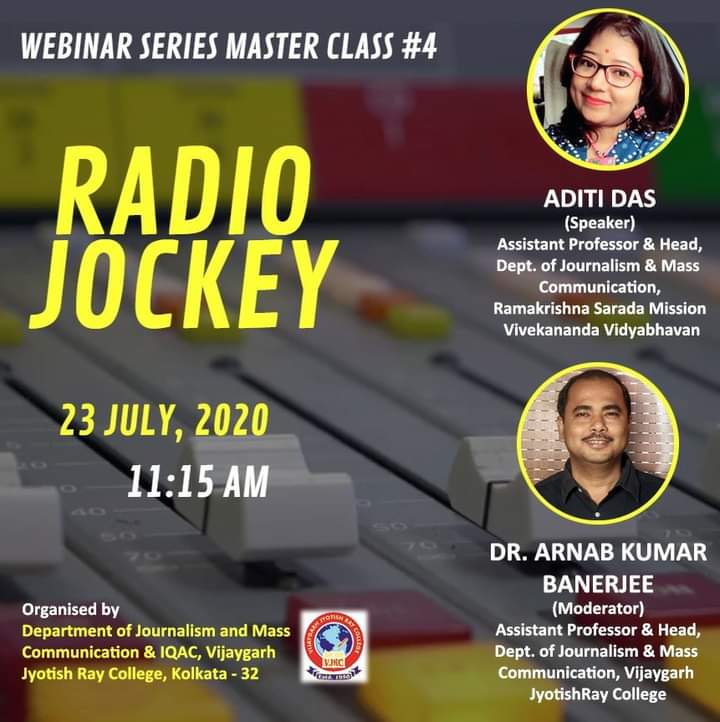
16. Date – 23.07.2020. Topic – Radio Jockey. Speaker – Aditi Das, Assistant Professor & Head, Dept. of Journalism & Mass Communication, Ramakrishna Sarada Mission Vivekananda Vidyabhavan.
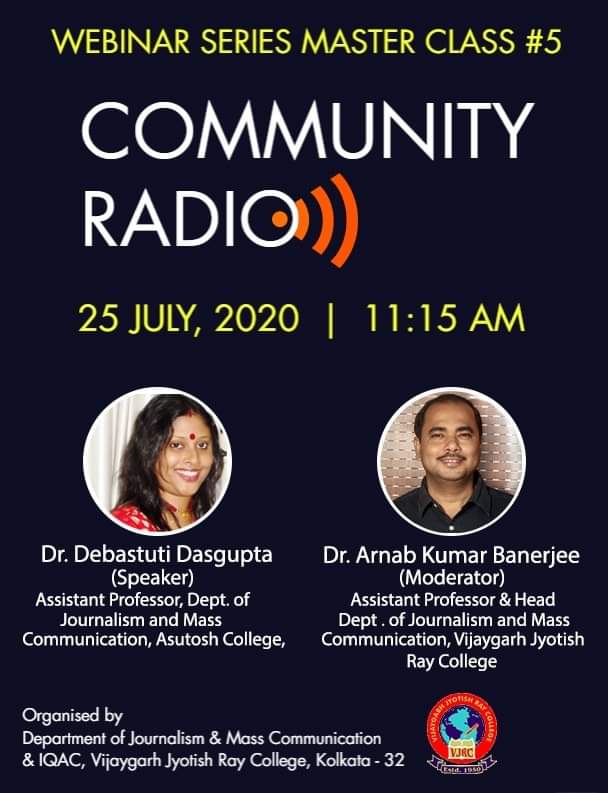
17. Date – 25.07.2020. Topic – Community Radio. Speaker – Dr. Debastuti Dasgupta, Assistant Professor, Dept. of Journalism and Mass Communication, Asutosh College.
18. Date – 26.07.2020. Topic – করোনা ও কুসংস্কার ঃ বিজ্ঞান সংগঠনের ভূমিকা Speaker – Dr. Siddhartha Narayan Joardar, Dr. Manas Pratim Das, Dr. Atanu Biswas.
19. Date – 28.07.2020. Topic – Indian Mass Media with Special Reference to New Media. Speaker – Dr. Enakshi Roy, Assistant Professor, Department Of Mass Communication, Towson University, USA.
20. Date – 29.07.2020. Topic – Public Health Management: COVID-19. Speaker – Dr. Isha Patel, Assistant Professor, Department Of Pharmacy Practice, Administration And Research, Marshall University School Of Pharmacy (MUSOP), USA.
21. Date – 29.07.2020. Topic – Role of Media in Development – An Overview of the Indian Perspective. Speaker – Dr. Sourav Gupta, Senior Assistant Professor, Department of Journalism and Mass Communication, Central University of Odisha.
22. Date – 31.07.2020. Topic – Film Making Through Mobile : Opportunities During LockDown. Speaker – Sambhram Pattanayak, Lecturer, Film And TV Production, Department Of Media Studies, AMITY University, Dubai.
23. Date – 01.08.2020. Topic – Educational Radio in Developing Countries. Speaker – Sonarekha Chattopadhyay, Head, Department of Journalism and Mass Communication, Vidyasagar College.
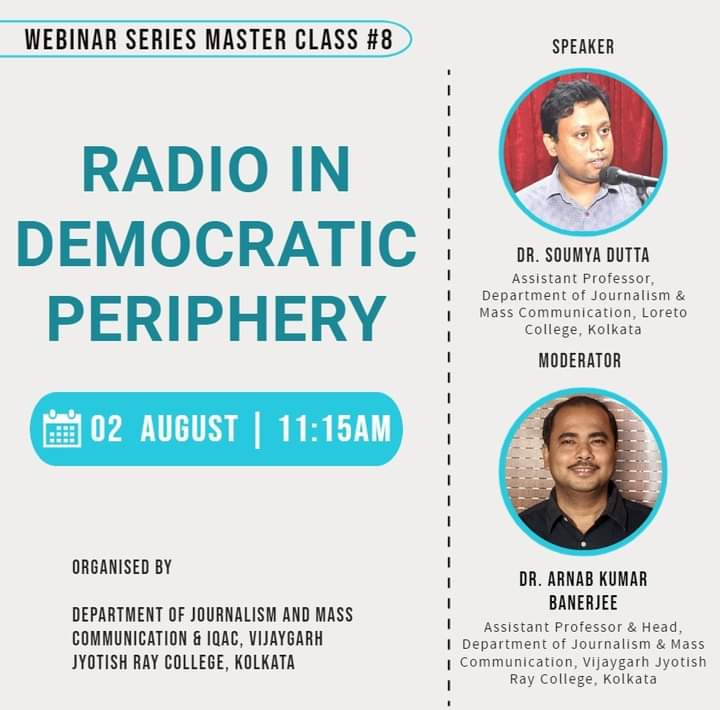
24. Date – 02.08.2020. Topic – Radio in Democratic Periphery. Speaker – Dr. Soumya Dutta, Assistant Professor, Department of Journalism & Mass Communication, Loreto College, Kolkata.
25. Date – 02.08.2020. Topic – করোনা পরিস্থিতিতে বিজ্ঞান সংগঠনের ভূমিকা Speaker – No Particular Speaker
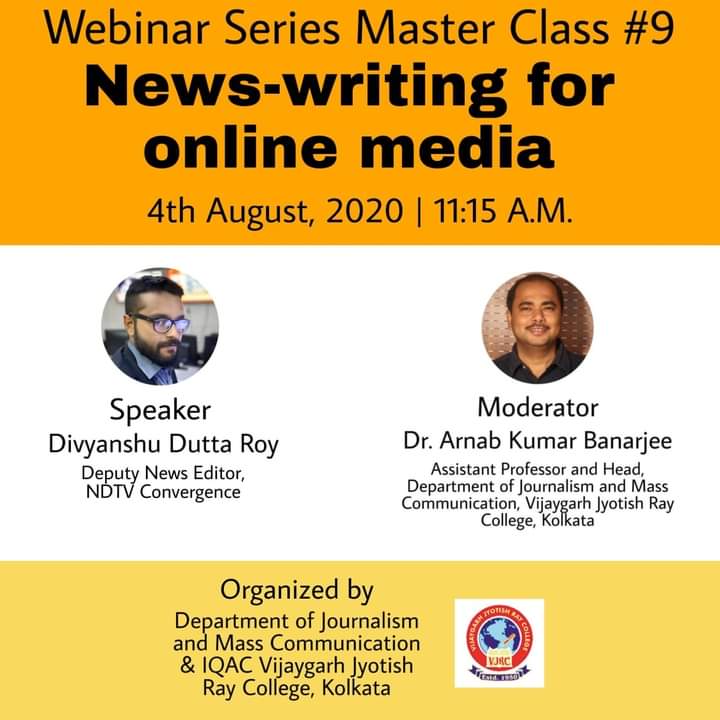
26. Date – 04.08.2020. Topic – News-Writing for Online Media. Speaker – Divyanshu Dutta Roy, Deputy News Editor, NDTV Convergence.
27. Date – 05.08.2020. Topic – Changing Paradigm of Indian Broadcasting System. Speaker – Biswajit Das, Faculty, Department of Journalism & Mass Communication, Maharaja Manindra Chandra College, Guest Faculty, C.U. & Radio Jackey, All India Rodio.
28. Date – 06.08.2020. Topic – Social Media Impact on PR.- How Professionals are Adopting and Using Social. Speaker – Debabani Mukherjee, Media Educator & Teacher Trainer.
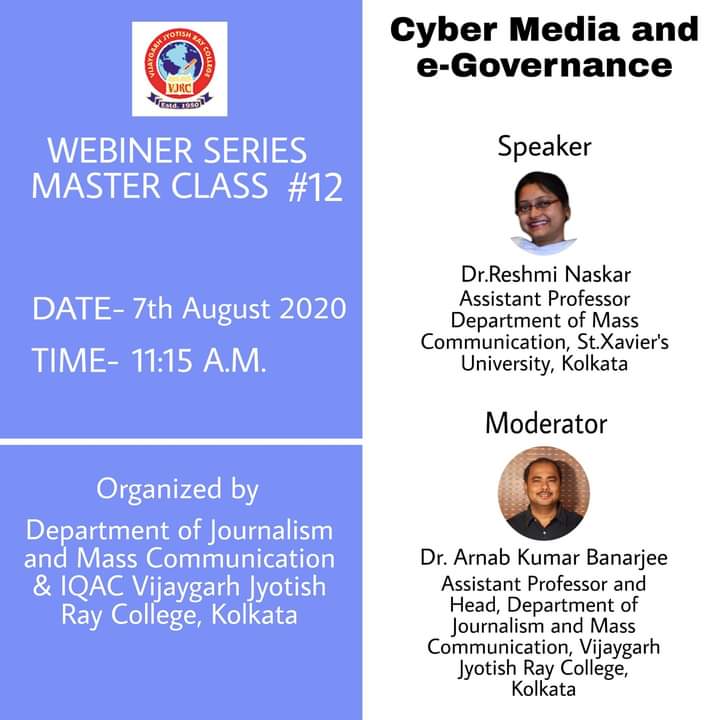
30. Date – 07.08.2020. Topic – Cyber Media and E-Governance. Speaker – Dr. Reshmi Naskar, Assistant Professor, Department of Mass Communication, St.Xavier’s University, Kolkata.
31. Date – 08.08.2020. Topic – Nuances of Basic Editing. Speaker – Soumma Chandra, Assistant Editor, NCERT, New Delhi.
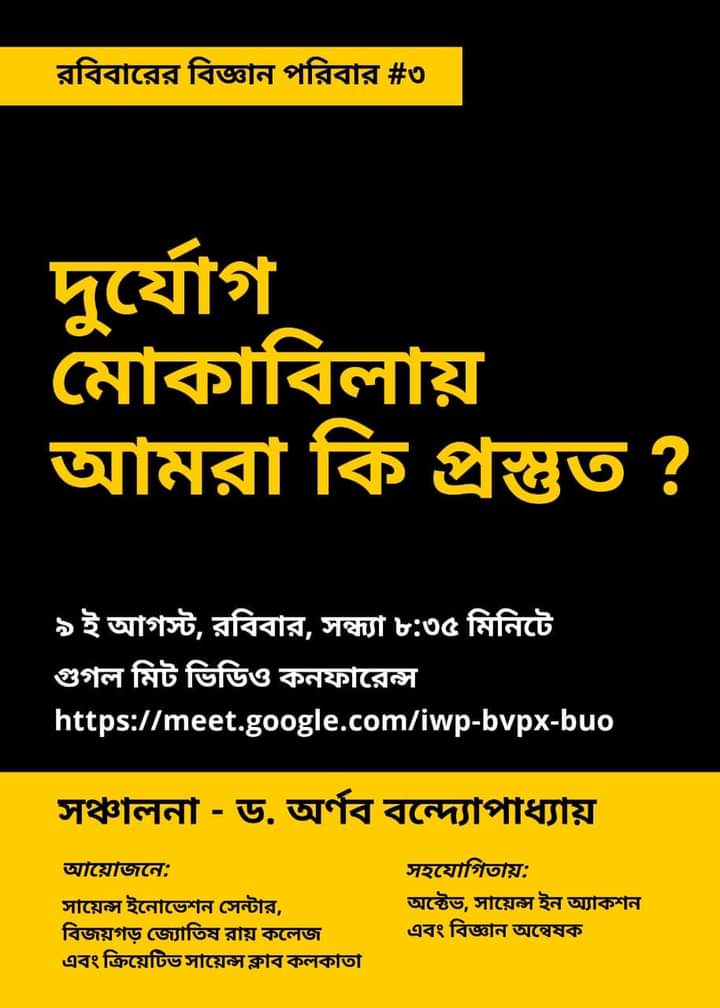
32. Date – 09.08.2020. Topic – দুর্যোগ মোকাবিলায় আমরা কি প্রস্তুত ? Speaker – No Particular Speaker
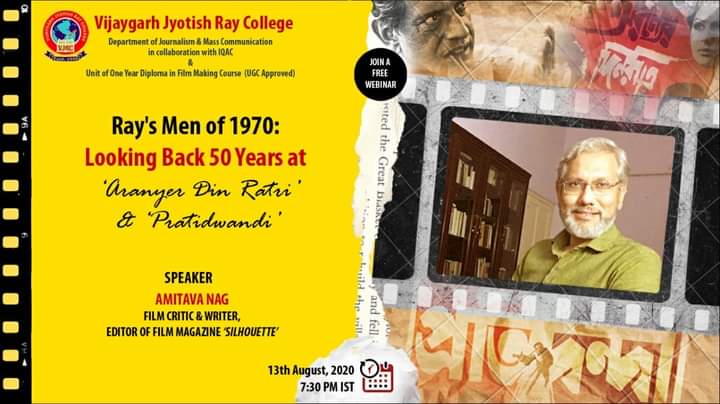
33. Date – 13.08.2020. Topic – Ray’s Men of 1970 : Looking Back 50 Years at “Aranyer Din Ratri & Pratidwandi”. Speaker – Amitava Nag, Film Critic & Writer, Editor of Film Magazine ‘SILHOUETTE’.
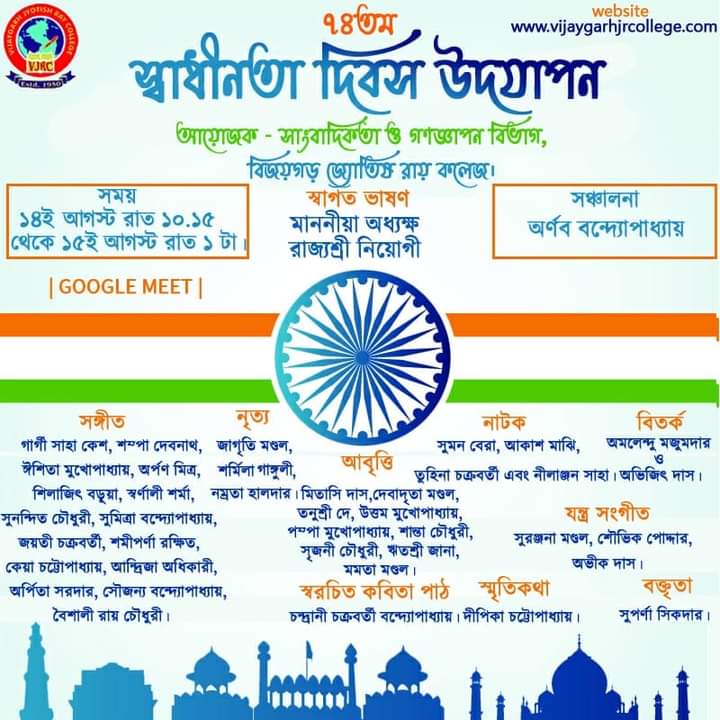
34. Date – 15.08.2020. Topic – Independence Day Celebrations / স্বাধীনতা দিবস উদযাপন Speaker – Several.
35. Date – 16.08.2020. Topic – জনস্বাস্থ্যের সঠিক তথ্য প্রচারে বিজ্ঞান সংগঠনের কী ভূমিকা থাকা দরকার Speaker – Dr. Pritam Roy, Public Health Expert, WHO Neglected Tropical Diseases Coordinator, West Bengal.
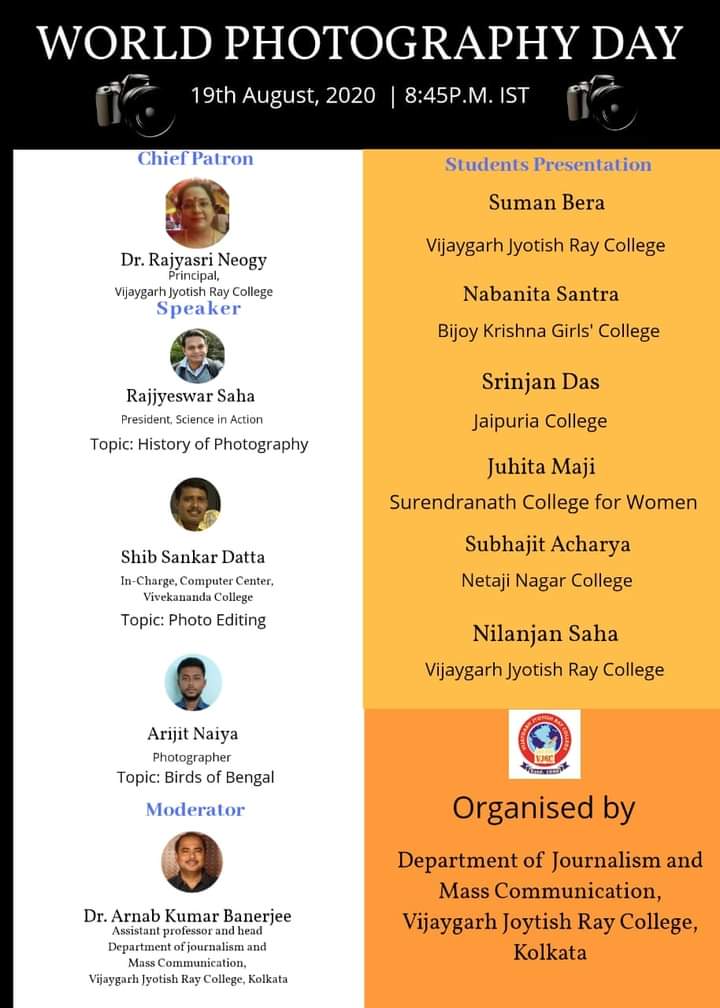
36. Date – 19.08.2020. Topic – World Photography Day. Speaker – No Particular Speaker.
37. Date – 20.08.2020. Topic – Scientific Temparament And Our Society. Speaker – Mukta Dabholkar, Science Communicator.
39. Date – 22.08.2020. Topic – Career Opportunities Post 10+2. Speaker – Sanchari Bhattacharjee, Career Counselor and Coach.
40. Date – 23.08.2020. Topic – Open Ended Experiments For Better Understanding of Science. Speaker – Dr. Rintu Nath, Senior Scientist, Vigyan Prasar, Dept. of Science and Technology, Govt of India.
41. Date – 25.08.2020. Topic – Journalism in The Age of Social Media & YouTube. Speaker – Prodipto Goswami, Independent New Media Journalist, Content Editor.
42. Date – 26.08.2020. Topic – Future of Radio Technology. Speaker – Rashmi Singh (HES I), HOD & Assistant Professor in Mass Communication PCLS Government College Karnal, Haryana.
43. Date – 27.08.2020. Topic – Film Festival And Film Distribution Process. Speaker – Pradipta Bhattacharyya, Filmmaker.
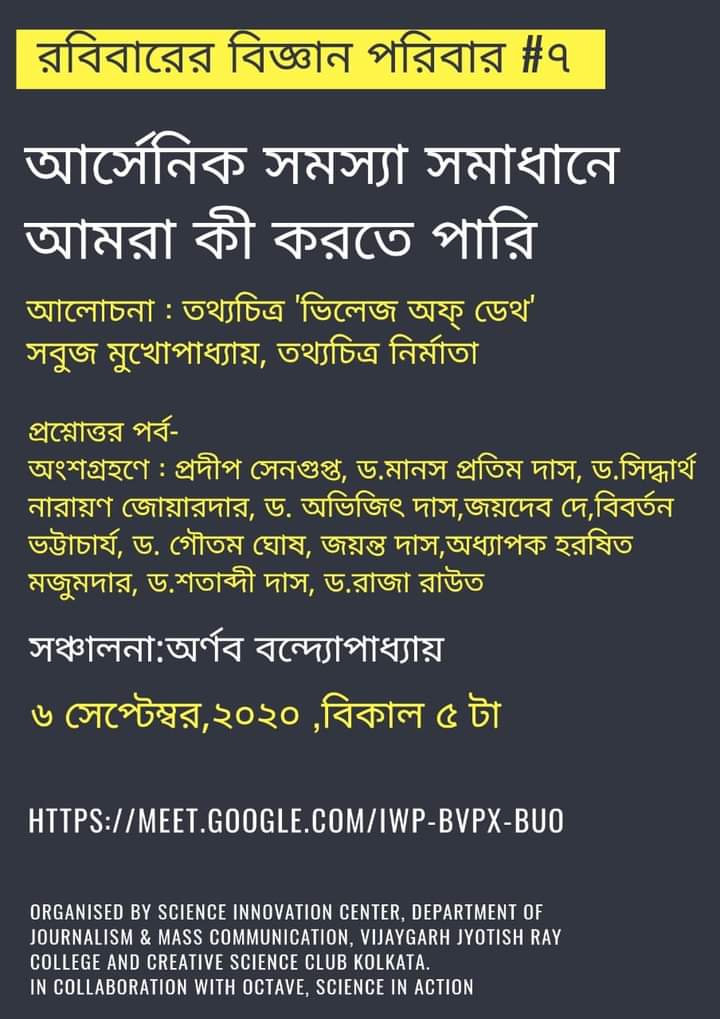
44. Date – 30.08.2020. Topic – Role of Science in Dealing with Arsenic Pollution / আর্সেনিক সমস্যা সমাধানে বিজ্ঞান সংগঠনের ভূমিকা Speaker – ড. অভিজিৎ দাস, সহকারী অধ্যাপক, বিজয়গড় জ্যোতিষ রায় কলেজ, বিবর্তন ভট্টাচার্য, চাকদা বিজ্ঞান ও সংস্কৃতি সংস্থা, জয়দেব দে,কাঁচরাপাড়া বিজ্ঞান দরবার।
45. Date – 31.08.2020. Topic – Library Orientation Programme. Speaker – Sudipta Shee, Librarian, Vijaygarh Jyotish Ray College.
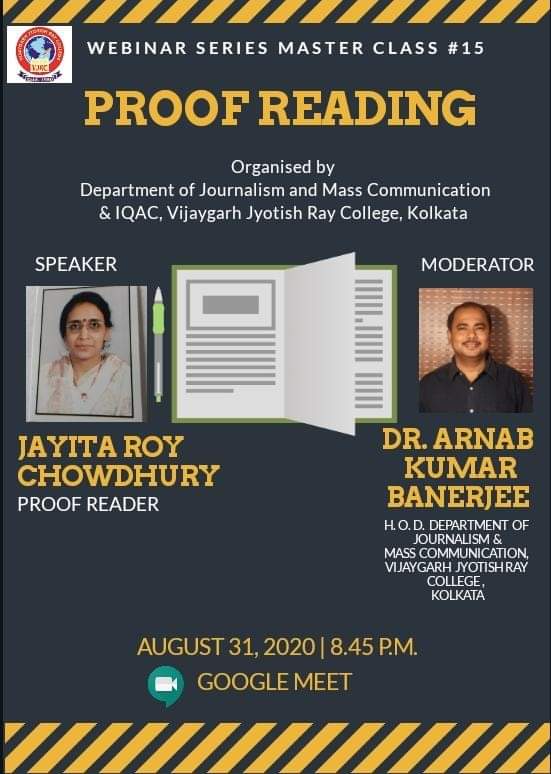
46. Date – 31.08.2020. Topic – Proof Reading. Speaker – Jayita Roy Chowdhury, Proof Reader.
47. Date – 01.09.2020. Topic – Lifestyle Diseases in Present Situation. Speaker – Dr. Junaid Jibran Jawed, Assistant Professor, School of Biotechnology, Dept of Life Science, Presidency University, Kolkata.
POSTER NOT FOUND
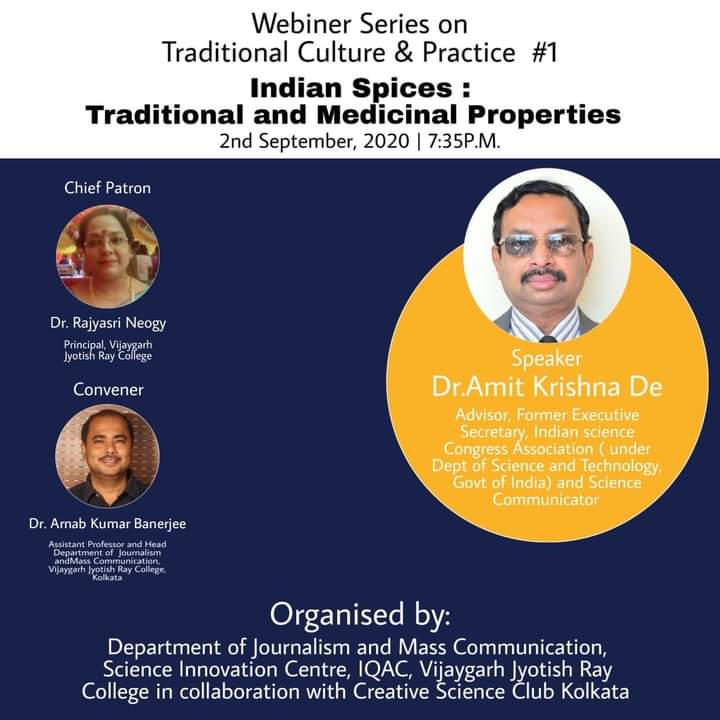
48. Date – 02.09.2020. Topic – Indian Spices : Traditional and Medicinal Properties. Speaker – Dr.Amit Krishna De, Advisor, Former Executive Secretary, Indian Science Congress Association (under Dept of Science and Technology, Govt of India) and Science Communicator.
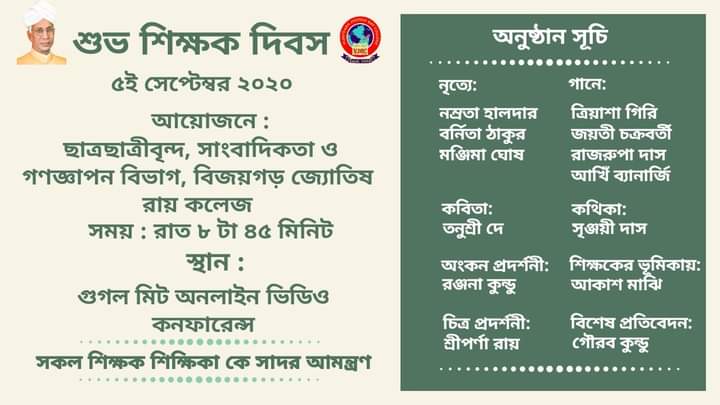
49. Date – 05.09.2020. Topic – Teacher’s Day Celebration / শুভ শিক্ষক দিবস Speaker – No Particular Speaker.
50. Date – 06.09.2020. Topic – আর্সেনিক সমস্যা সমাধানে আমরা কী করতে পারি Speaker – প্রদীপ সেনগুপ্ত, ড.মানস প্রতিম দাস, ড.সিদ্ধার্থ নারায়ণ জোয়ারদার, ড. অভিজিৎ দাস,জয়দেব দেবিবর্তন ভট্টাচার্য, ড. গৌতম ঘোষ, জয়ন্ত দাস, অধ্যাপক হরষিত মজুমদার, ড.শতাব্দী দাস, ড.রাজা রাউত
51. Date – 07.09.2020. Topic – Immunology and Vaccination. Speaker – Dr. Manas Chakrabarty, Professor, Calcutta Institute of Pharmaceutical Technology & Allied Health Sciences (CIPTAHS), Uluberia, Howrah.
52. Date – 09.09.2020. Topic – Role of Electronic Media in Disaster. Speaker – Kazi Sarfaraz ur Rahman, Srinjoyee Das, Rohit Debnath, Sunidhi Lakhandri, Akash Majhi, Sreeparna Roy, Rohit Das, Nilanjan Saha, Arpita Basu (All students of Journalism and Mass Communication Department, Vijaygarh Jyotish Ray College)
POSTER NOT FOUND
53. Date – 12.09.2020. Topic – শতবর্ষে সত্যজিত রায়: চলচ্চিত্রে ডায়ালগ, ইমেজ এবং মিউজিকের বহুমাত্রিক ব্যবহার । Speaker – রাজীব নন্দী, সহকারী অধ্যাপক যোগাযোগ ও সাংবাদিকতা বিভাগ, Chattagram University, Bangladesh, And Coordinator in Indo – Bangla Media Educators Network, মহিন সুমন, Software Engineer, Musician, Observer and Researcher of Satyajit Ray’s songs, Atlanta, U.S.
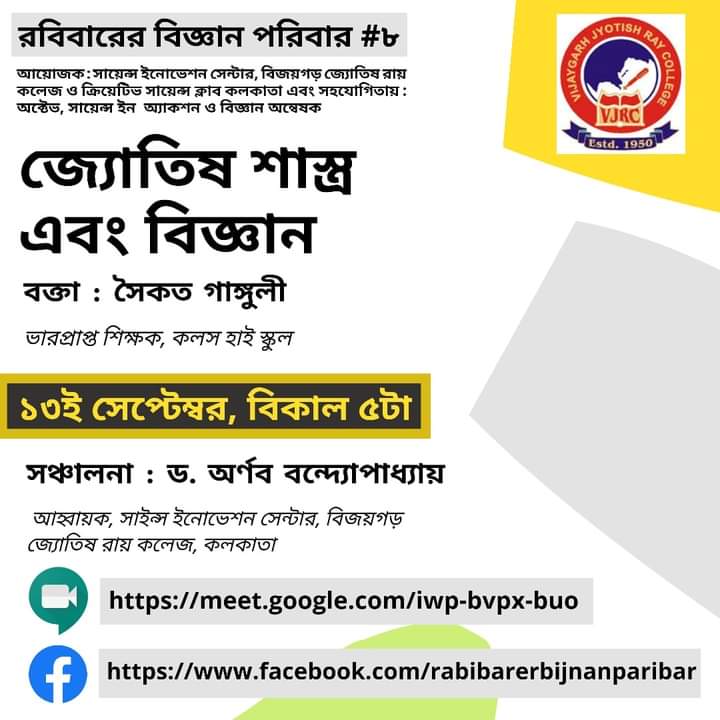
54. Date – 13.09.2020. Topic – জ্যোতিষ শাস্ত্র এবং বিজ্ঞান। Speaker – সৈকত গাঙ্গুলী, ভারপ্রাপ্ত শিক্ষক, কলস হাই স্কুল।
55. Date – 14.09.2020. Topic – প্রবাসীর চোখ: অন্য আমেরিকার গল্প … Speaker – ড. পার্থ ব্যানার্জী, মানবাধিকার কর্মী, লেখক, গবেষক এবং অধ্যাপক ব্রুকলীন, নিউ ইয়র্ক, মার্কিন যুক্তরাষ্ট্র।
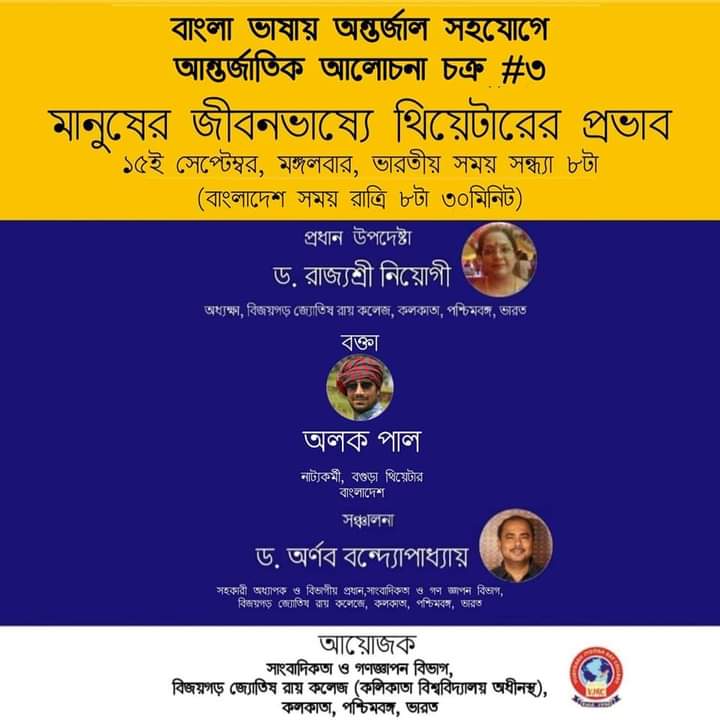
56. Date – 15.09.2020. Topic – মানুষের জীবনভাষ্যে থিয়েটারের প্রভাব । Speaker – অলক পাল, নাট্যকর্মী, বগুড়া থিয়েটার বাংলাদেশ।
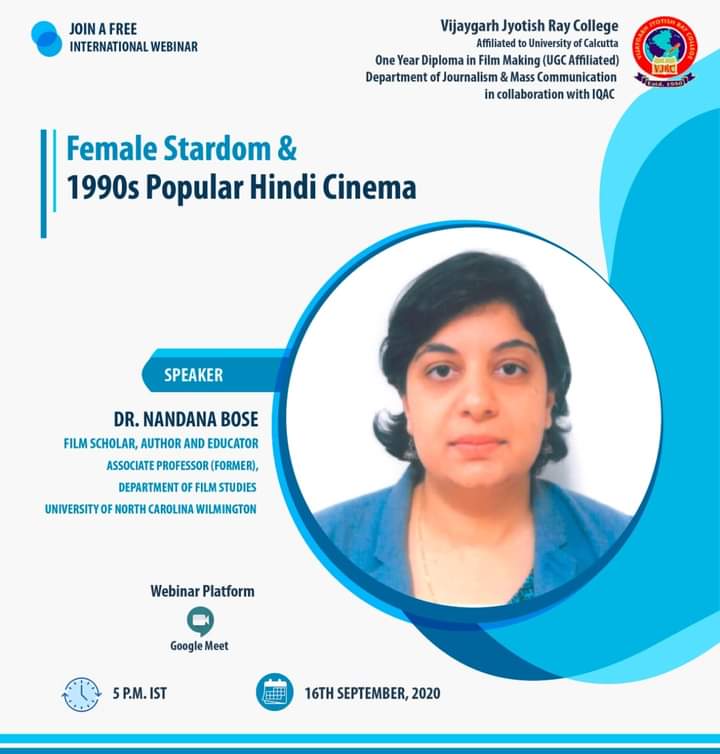
57. Date – 16.09.2020. Topic – Female Stardom & 1990s Popular Hindi Cinema. Speaker – Dr. Nandana Bose, Film Scholar, Author And Educator, (Former) Associate Professor, Department of Film Studies, University of North Carolina, Wilmington.
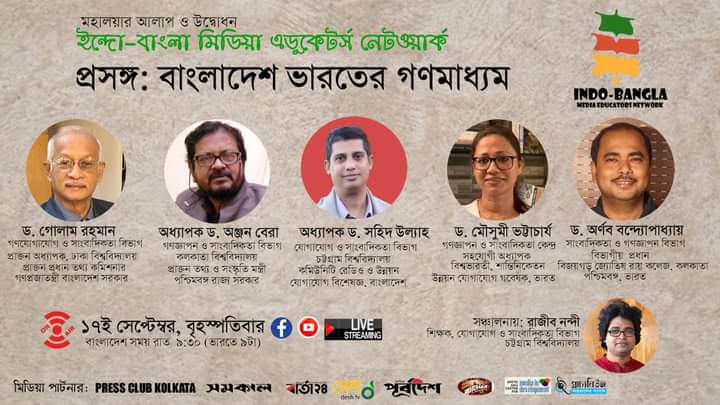
58. Date – 17.09.2020. Topic – বাংলাদেশ ভারতের গণমাধ্যম। Speaker – ড. গোলাম রহমান, অধ্যাপক ড. অঞ্জন বেরা, অধ্যাপক ড. সহিদ উল্যাহ, ড. মৌসুমী ভট্টাচার্য, ড. অর্ণব বন্দ্যোপাধ্যায়।
61. Date – 04.10.2020. Topic – জঙ্গল ধ্বংস করে ভূসম্পদ আহরণ কি জরুরী ? Speaker – Ayesha Khatoon, মনিকা টুডু, মানি হেমরম, খোকন মাজি, Mangal Mandi, Babulal Tudu.
62. Date – 09.10.2020. Topic – হৃদয়ে লেখা নাম – শতবর্ষের আলোকে সঙ্গীত জ্ঞাপক মান্না দে। Speaker – ড. রাজীব কর চৌধুরী, শ্রোতা গবেষক, দূরদর্শন কেন্দ্র, কলকাতা, বিশিষ্ট সঙ্গীত শিল্পী ও সুরকার (আকাশবাণী ও দূরদর্শন)
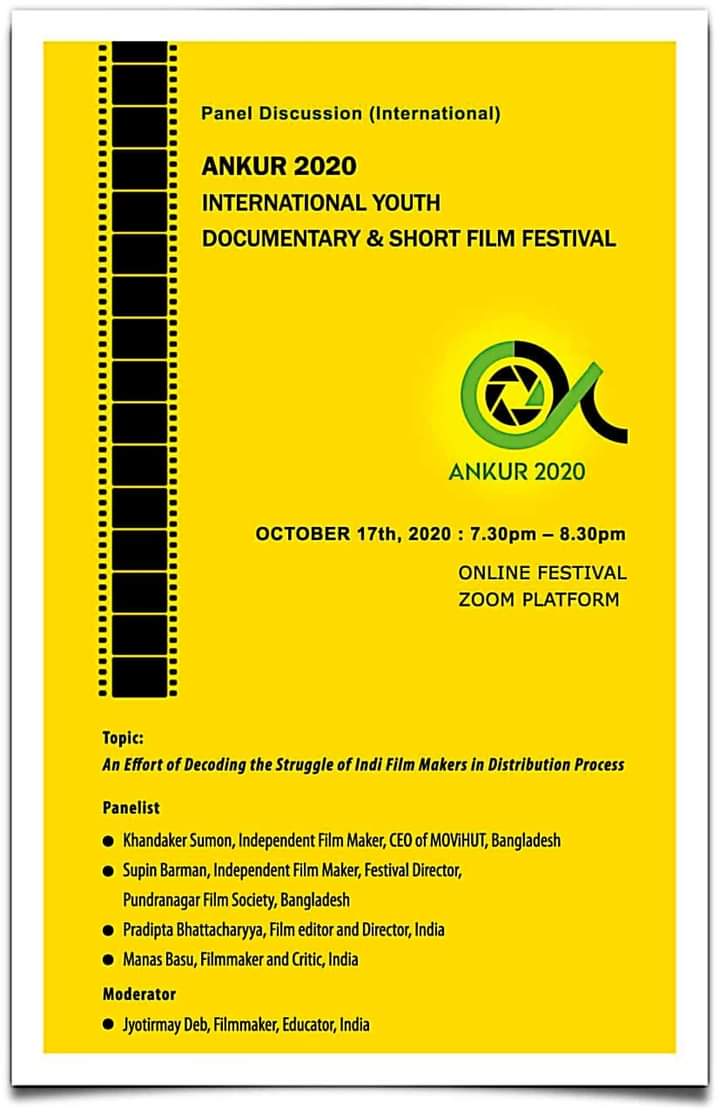
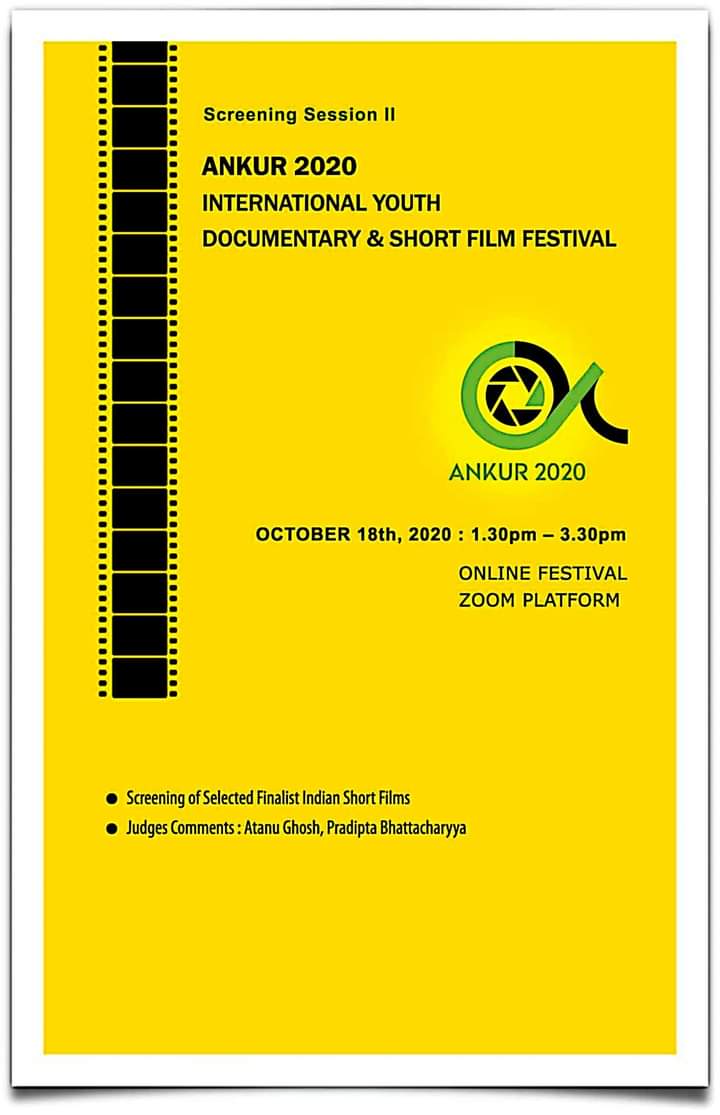
63. Date – 17th to 18th October, 2020. Topic – Ankur 2020 Youth Documentary & Short Film Festival. Speaker – Several.
64. Date – 11.01.2021. Topic – National Youth Day Speech Competition on Relatability of Swami Vivekananda in inspiring today’s Youth. Speaker – Students of Journalism and Mass Communication Department of Vijaygarh Jyotish Ray College.
65. Date – 23.01.2021. Topic – Quiz competition and e-tabloid publication on the occasion of 125th Birthday of Netaji Subhash Chandra Bose. Speaker – Several.
66. Date – 28.02.2021. Topic – National Science Day, Future of Science, Technology & Innovation. Speaker – Dr. Rintu Nath.
67. Date – 07.04.2021. Topic – World Health Day, 2nd Wave of Covid-19 & Vaccination. Speaker – Dr. Siddhartha Joardar.
68. Date – 14.04.2021. Topic – 130th Birth Anniversary of Dr. B. R. Ambedkar, Social Justice & Ambedkar. Speaker – Dr. Soumen Chakrabarty.
69. Date – 21.04.2021. Topic – Earth Day Celebration, Experience of Antarctica. Speaker – Dr. Pradip Malhotra.
70. Date – 25.04.2021. Topic – Hands on Workshop on Cloud Computing, Exploring DevOPS – The Tool for the Future. Speaker – Dr. Parijat Chakrabarty, Dr. Arnab Kumar Banerjee, Mr. Malay Sharma.
71.Date – 05.06.2021 & 06.06.2021. Topic – World Environment day Celebration. Speaker – Several.
72.Date – 13.06.2021. Topic – Cyclone. Speaker – Dr. Rajyasri Neogy, Mr. Ratul Dutta, Alekhya Chakrabarty, Dr. Arnab Kumar Banerjee, Mr. Ankan Pal, Mr. Rajjyeswar Saha.
74. Date – 05.07.2021. Topic – Workshop on How To Create Tabloids. Speaker – Rajrupa Das & Akash Majhi.
75. Date – 17th July to 30th July. Topic – Two Week’s Online Workshop on Daily Newspaper. Speaker – Several.
76. Date – 14.08.2021. Topic – 75th Independence Day Celebration. Speaker – Several.
77. Date – 19.08.2021. Topic – World Photography Day. Speaker – Mr. Rangan Dutta, Dr. Debkumar Mukhopadhyay & others.
78. Date – 21.08.2021 & 22.08.2021. Topic – Student Mentorship Programme, Future of Journalism and Mass Communication and Film Studies after Graduation. Speaker – Several.
79. Date – 28.08.2021. Topic – Career Progression Opportunities, Content Creation- Discover Endless Opportunities. Speaker – Manjari Ganguly.
80. Date – 04.09.2021. Topic – Student Mentorship Programme, Sharing Knowledge Through Stories. Speaker – Selva Ganapathy.
81. Date – 07.10.2021. Topic – Student Mentorship Programme, সাংবাদিকতার বাংলা বই. Speaker – Dr. Baidyanath Bhattacharya, Mr. Sujit Ray, Mr. Santosh Debnath.
82. Date – 30.10.2021. Topic – Online Lecture Series – 01, Preserving Heritage Audio Visually, Coping up with climate change in Sundarban. Speaker – Subha Das Mullick & Dr. Pranabesh Sanyal.
83. Date – 11.12.2021. Topic Environmental crisis – it’s way out. Speaker – Samar Bagchi.
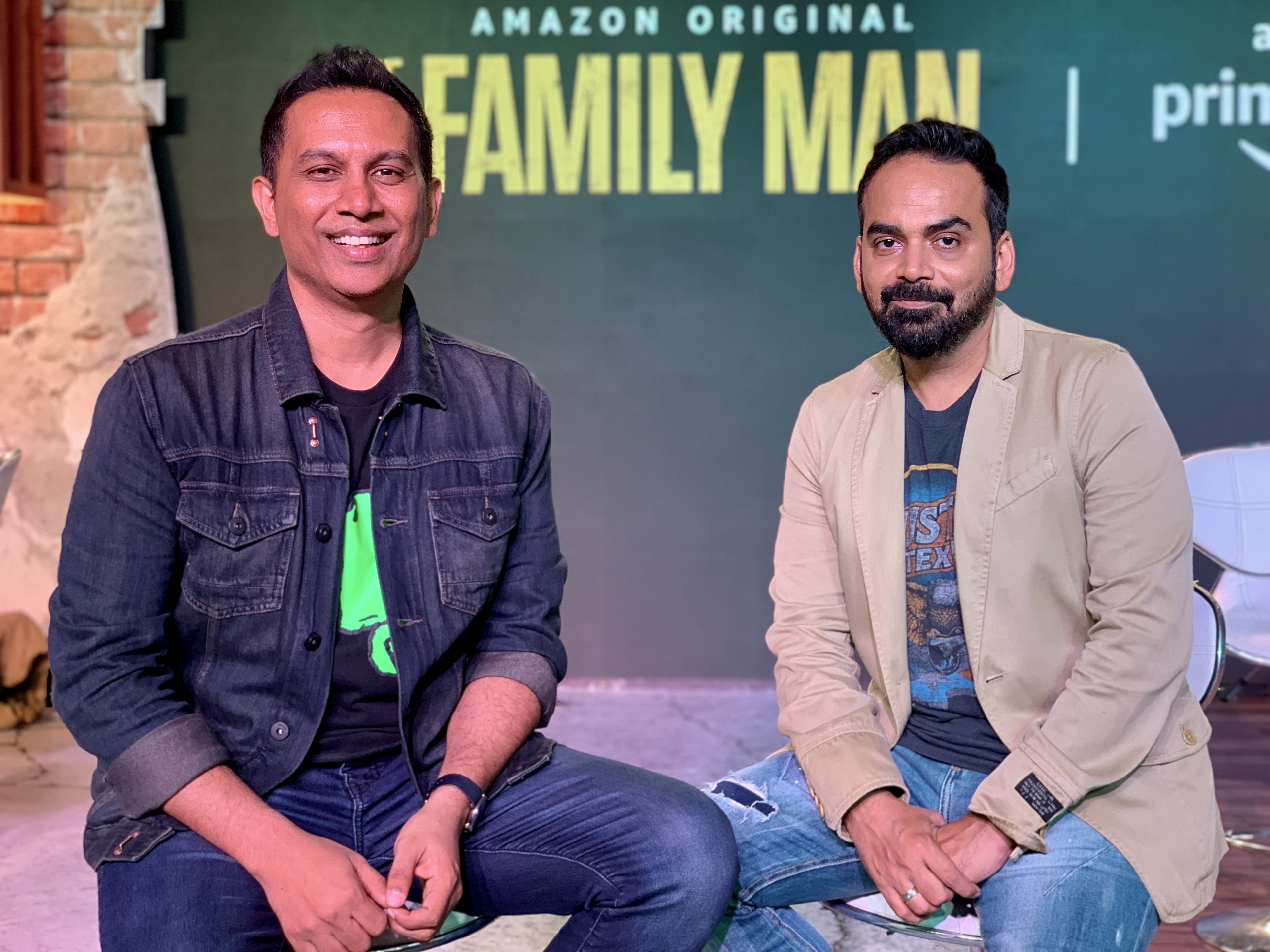
First things first “SPOILER ALERT” So finally I watched the most awaited season 2 of Family Man!! And as it happens with almost all web series that they lose the impact and charm in the 2nd season thankfully that’s NOT the case with Family Man. Obviously there are minute flaws but I loved it and am not dissapointed at all!
Manoj Bajpayee is a stellar actor he just owns Srikant Tiwari like no one could! The best part about this character is the fact that he’s so real and human unlike other cop films that portray the protagonist as larger than life heroes. And the way Manoj Bajpai portrays all the shades of emotions of the character whether it’s anger, frustration, humour, vulnerability, etc is absolutely commendable. One of the most emotionally effective scene that brought me on the verge of crying was the scene where Srikant calls up Suchi in a very vulnerable state and is about to break down but holds himself up to carry on with the mission. Manoj Bajpai takes us on the journey of Srikant Tiwari where we cried and laughed with him, feel for him and fell in absolute love with him.
Milind (played by Sunny Hinduja) and Zoya (played by Shreya Dhanwantary) are thankfully safe and back but are traumatised. And the fact that they portrayed the state of a mental disorder i.e. Post Traumatic Stress Disorder (PTSD) so well only proves that they are such natural actors. The scene where Milind dies and the TASC officers raise a toast for him and his glass and radio was kept on his desk and the song “Sach Mere Yaar hai” plays was absolutely heart wrenching.
From the moment Seema Biswas Biswas enters the frame as PM Basu she takes full charge of the character and brings a hard to overlook resemblance with Mamata Banerjee which was great by the way!
Dhriti (played by Ashlesha Thakur), does a great job portraying the teenage angst and the climax scene with Kalyan aka Salman had my jaw dropped! Priyamani as Suchi does a fair job portraying the conflict and baggage, emotional exhaustion inside her very well. The scene where she breaks down hugs Srikant when Dhriti is missing was really emotional and very well enacted. Atharva (played by Vedant Sinha) is a stunner and steals the show in every scene he’s present in.
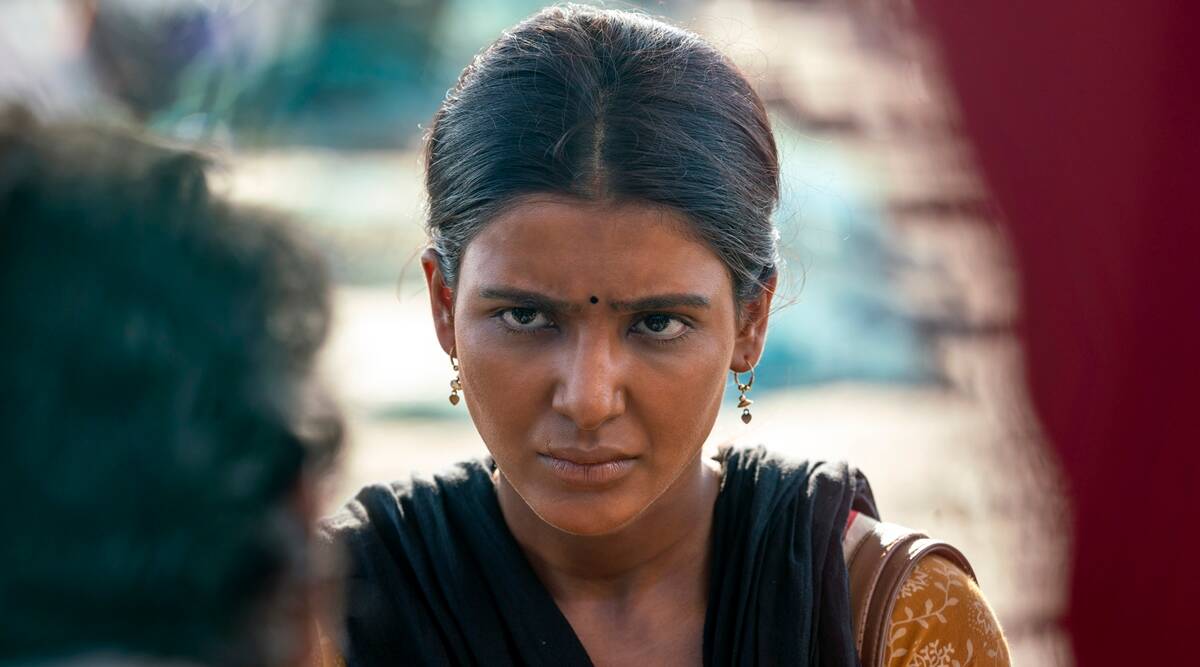
Honestly speaking I have mixed feelings about the casting of Samantha Akkineni as Raji. Not because she’s not a good actor, she has done an excellent job the way she portrayed the actions sequences and maintained the command over the character was great to watch especially her eyes they had that burning fire in them full of rage. The scene where she kills her boss and the way she gets rid of the body gave me goosebumps and also the face off scene between her and Jk gives so much of adrenaline rush. But the fact that she’s so fair skinned and they used so much of make up to make her look dark was a bit disappointing. It’s great that the makers managed to get most of the cast on point and Samantha Akkineni’s acting skills bring out the monster Raji has become, but the make-up to darken skin is jarring and took me a second to get used to in every scene she appears. Instead of that if a dark skinned actress would have been casted that would have been better I guess.
There are way too many jump cuts in the series which sometimes gave us the required amount of suspense and kept us on the edge of our seats but sometimes it was unnecessary and just built up some pseudo tension.
JK played by Sharib Hashmi is soo good with that tinge of humour he’s a great actor I feel and the chemistry between him and Srikant is one of the major highlights of the series. That scene where Srikant visits JK in the hospital is so emotional yet adorable and both the actors pull it off so well that you already have “khushi ke aansoo” in your eyes!
The subtle humour in the whole series let’s you know that you are watching a Raj&DK product. That’s what sets The Family Man apart from the dozens of other, more popular streaming series, the playful tone that Raj and DK bring to the party. It also maintains the light – heartedness in an otherwise dark and serious track. But one point where I felt they contradicted their theory is that the series wants to stress that terrorism isn’t limited to one particular community, but can’t seem to resist the temptation of putting militant-minded Muslims in antagonistic roles. Also, the fact how they have shown the Sri Lankan Tamil rebel’s psychology, their past, their purpose of the mission. That hasn’t been the case with Pakistani terrorists.
The counseling scenes somehow felt a bit prolonged and boring to me and the fact that it was treated with a tinge of careless attitude and the way insensitive jokes and quotes from the internet were used doesn’t help at all. The chase and action sequences are so thrillingly crafted that you’ll happily ignore some glaring shortcomings in the CGI department. To sum it up the series is breezily paced, impeccably acted, and charmingly unrefined.
You know you are bang in the middle of Prakash Jha territory when politics, democracy, policing, encroachment of forest land, reservation, the caste system are repeatedly invoked in a story crammed with dizzying twists and turns. In Aashram, an MX original series (both the seasons)that packs quite a punch, the veteran producer-director adds religion to his collection of socially grounded themes. He has used this series to reflect upon the infiltration of blind faith into India’s public life and its deleterious consequences. The nine-episode series rests on the theme of a manufactured personality cult. It explores the nuts and bolts of andh-bhakti or blind faith from which a godman’s power flows and gnaws away at the vitals of the heart of a society with multiple faultlines. The series shows us the dark side of our society where crime, cover-ups and crass compromises by people in power puts the weak and the gullible at the greatest risk. In this context one dialogue that really stands out is “Bhakti ki zaroorat, kamzor aur gareeb logon ko zyaada hoti hain na.” The production designing is splendid which completely sets the tone. The socio-cultural landscape portrayed in Aashram is, unsurprisingly, loaded against women. The episodes might feel a bit lengthy at times but at times I felt it was necessary for the establishment of the plot and characters. Aashram, introduces Baba Nirala (Bobby Deol) like a superstar in a masala film. Baba Nirala played by Bobby Deol is effective but lacks that genuinety of a godman. He seems quite restricted and hence the depth is missing but compared to his career graph he has done a decent job I would say. But even if he’s the projected lead in the series he’s not so according to me there are other people who shine more than him like his trusted aide Bhupinder alias Bhopa played by Chandan Roy Sanyal who nails it and is absolutely amazing as the badass right hand of the godman. Dalit girl Pammi Lochan played by Aaditi Phankar is the star of the series according to me who being a Maharashtrian girl has carried the role of a haryanvi wrestler with absolute ease and effortlessly being. Her brother, Satti played by Tushar Pandey is also great as the naive and gullible person who is a perfect fit for the role of an Andh bhakt. Sub-inspector Ujagar Singh played by Darshan Kumaar has been portrayed by great strength. His chemistry with Dalit constable Sadhu played by Vikram Kochchar is quite heart rending. Local cable news journalist Akki Rathi played by Rajeev Siddhartha is quite a significant character played with lot of genuineness. Natasha Katiyar played by Anupriya Goenka & Babita played by Tridha Choudhury are the two most strongest female characters in the series after Pammi. But the series is quite a binge worthy project even with a bit of faultiness in bits and pieces here and there. The cliff hangers really keeps you waiting for season 3 desperately!!
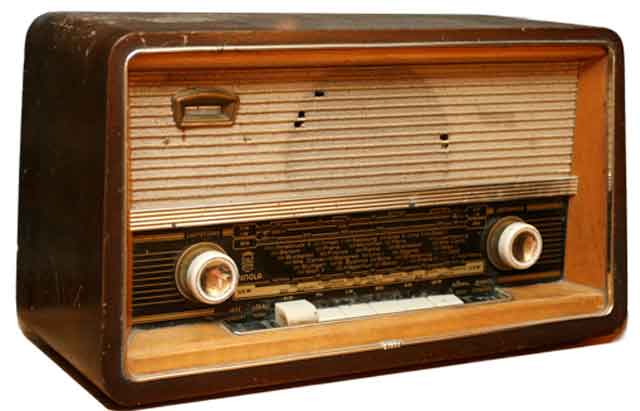
Radio was the first truly mass medium of communication, reaching millions of people instantly and altering social attitudes, family relationships, and how people related to their environment. Radio is an attractive medium among the various mass communication media because of its special characteristics.
Radio is widely used mass communication medium and has a great potentiality in dissemination of information as radio signals cover almost entire population. More than 177 radio stations are there across the country. About 97 percent of the population is reached by the radio.
Radio being a convenient form of entertainment caters to a large audience. With the advent of transistors this medium hrs reached the common man in urban and rural areas of India, though the utilization of radio is more among rural elites.
It has advantages over the other mass media like television and newspapers in terms of being handy, portable, easily accessible and cheap. It is the most portable of the broadcast media, being accessible at home, in the office, in the car, on the street or beach, virtually everywhere at any time.
Radio is effective not only in informing the people but also in creating awareness regarding many social issues and need for social reformation, developing interest and initiating action.
For example, in creating awareness regarding new policies, developmental projects and programs, new ideas etc. It can help in creating a positive climate for growth and development.
It widens the horizons of the people and enlightens them, thereby gradually changing their outlook towards life. Research has shown that radio is an effective medium for education when it is followed up with group discussion and question- answer session.
In India, radio with its penetration to the rural areas is becoming a powerful medium for advertisers. It gets 3 percent of the national advertising budget. Radio is still the cheap alternative to television, but is no longer the poor medium in advertising terms.
Because radio listening is so widespread, it has prospered as an advertising medium for reaching local audiences. Moreover, radio serves small highly targeted audiences, which makes it an excellent advertising medium for many kinds of specialized products and services.
As far as commercials are concerned, no one is able to tune out commercials easily as is possible with remote control devices and VCRs. It is thought that radio’s ability to attract local advertisers hurts mainly newspapers, since television is less attractive to the small, local advertiser.
As far as audience is concerned radio does not hamper persons mobility. As a vehicle of information for masses it is still the fastest. For instance, it would take less time for a news reporter for radio to arrive on the spot with a microphone and recorder than the same for TV along with a shooting team and equipment.
Another important feature of radio as mass medium is that it caters to a large rural population which has no access to TV and where there is no power supply. In such places, All India Radio’s programmes continue to be the only source of information and entertainment. Moreover, AIR broadcasts programmes in 24 languages and 140 dialects.
“Radio should be treated akin to newspapers in view of the fact that it is local, inexpensive, linked to communities, has limited band width and operates through simple technology”.
The economics of radio does allow tailoring programme content to the needs of small and diverse audiences. Thus it is economically viable to recast a programme for broadcast to audiences in different sub regional, cultural and linguistic context.
This enhances the value of radio as a medium in networking developmental programmes. Thus, it offers many possibilities in networking, from locally or regionally co-ordinated broadcasts and interactive exchange of queries and data.
It can serve as a standalone medium of information dissemination or a support medium for curricular learning, jointly with print material or with fieldwork.
Kapoor, Director general of AIR (1995) said, ” Radio is far more interactive and stimulating medium than TV where the viewer is spoon-fed. Radio allows you to think, to use your imagination. That is why nobodyever called it the idiot box”.
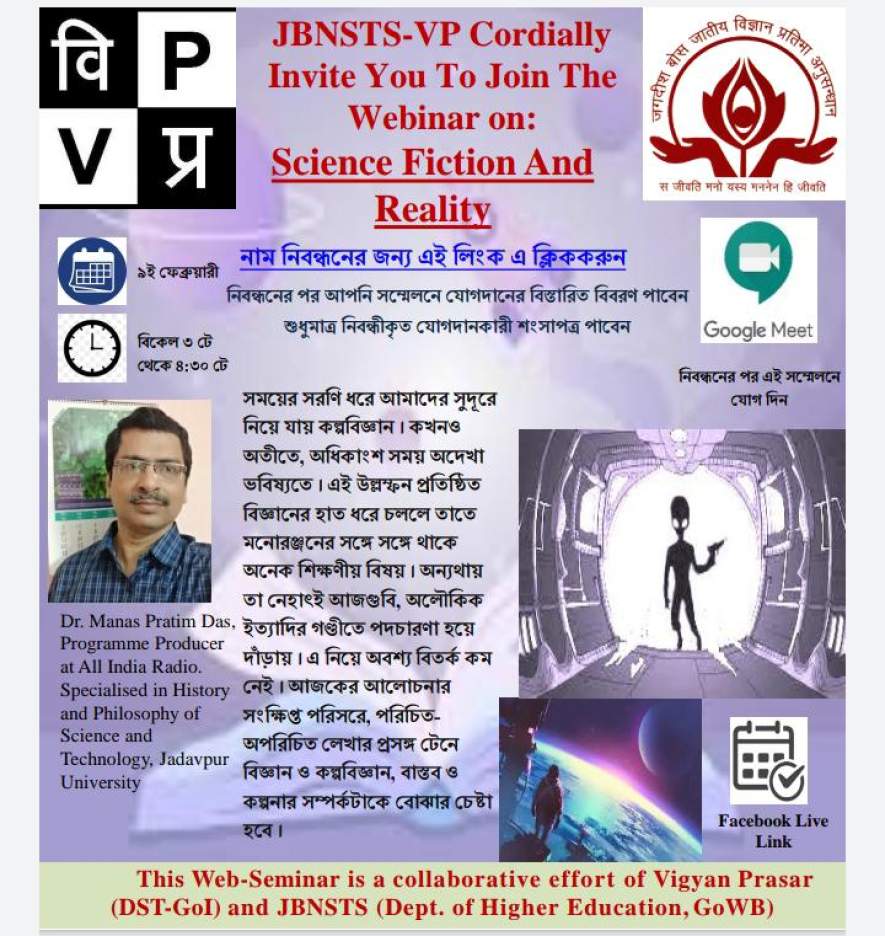
Kolkata, February 9: “Science fiction has taken us far and wide over time. Never in the past, most of the time in the unseen future. If this leap continues in the hands of established science, there are many lessons to be learned along with entertainment. Otherwise, it becomes a step in the direction of strange, miraculous, etc. Of course, there is no less debate about this. ”
Science fiction is a subject that has no end. The only goal of those who have researched and pursued science is to bring science to the common people, to the students. To develop a science-minded attitude. In the current New Normal situation, people have become accustomed to virtual platforms. Jagadish Bose National Science Talent Search and Science Promotion has taken such an initiative. A webinar was organized on Tuesday, February 9, 2021 in their joint venture. The theme of the webinar was “Science and Fiction, Real”. The webinar starts at 3 p.m. The main speaker of the discussion was the program producer of Akashvani. The mind is the perfect slave.
Today’s discussion was moderated by Mr. Abhijit Kar. Mrs. Maitri Bhattacharya gave the inaugural address at the beginning. He also introduced today’s keynote speaker Manasbabu to everyone. Speaker Manasbabu shed light on today’s topic through a beautiful presentation. He first spoke of Arthur C. Clark. Who has been called the father of satellite communications. He worked with the radar. Went to Sri Lanka for scrubbing. On May 25, 1945, his novel The Space Station was published, where he gave an idea of the satellite. The first communication signal went in 1980, dubbed ‘Courier 1B’. The signal was first sent from the United States. He wrote a letter, through which he introduced science fiction. This signal showed slowly realizing Clark’s imagination. In 1969 he wrote a novel called Clarke Clipper. There he mentioned the elevator that would go up to the satellite. Manas Babu is also talking about Russian scientist Konstantin Slovsky and Fred Hail.
Variety is the spice of life – or so they say. The same is often true for radio programmes.
Chart Shows
Chart shows are a classic program type that you can add to your line up. Music chart shows are a countdown of the top-rated songs for the week or the month. You could create a chart of your own based on audience opinion and listener stats, or opt to broadcast a more well-known chart, such as a Billboard chart.
Entertainment Programs
Entertainment segments can provide some light fun to your radio programming. These shows can include stand-up comedy clips, funny reviews, call-in quizzes, and fun competitions for your listeners. These segments could serve as an entertaining change of pace between music and talk segments.
Late Night
Late evenings usually have fewer listeners tuning in, which could be a great time to debut new DJs who are still finding their groove. Late-night programs are often music-centric, though it often depends on a station’s late-night listener stats.
Live Shows
Live radio programs are broadcast in real time. There are plenty of options when it comes to live shows – be it talk, an interview, or live-event coverage. Broadcasting live is a fantastic way to engage your listeners in real-time events, by taking live calls, and allowing shout-outs, and more.
Morning Wake-Up Shows
The Morning Show is another staple in the world of radio. This is your chance to help your listeners wake up and get pumped for the day ahead. For area-specific stations, morning programs are a great opportunity to cover recent events, news, traffic, and weather, to prepare your listeners for the day.
Music Shows / Genre Specific Programming
Music shows are just that – centered around music. The average online radio music program may consist of an hour or two of nothing but great tunes. Music shows can be specific to a genre (disco, country), a decade (70’s, 80’s), or even a theme (movie soundtracks, workout music, etc.).
News and Weather
News and Weather segments are a great way of sharing useful information with your listeners. You can cover current events, weather, and exciting news stories on a local or global scale.
News and Weather
News and Weather segments are a great way of sharing useful information with your listeners. You can cover current events, weather, and exciting news stories on a local or global scale.
Radio Dramas
While the term “Radio Drama” might seem a bit outdated, many of these appear as podcasts today. Radio Dramas refers to programming that consists of stories, comedies, musicals, and more, that rely on dialogue and sound effects to tell a story. Radio dramas, depending on your demographic, remain a great way of entertaining your listeners every once in a while.
Request Shows / Call-In Shows
Request shows are an excellent way of engaging your listeners and enabling them to feel like they are a part of the show. These are usually live online radio shows that allow listeners to share real-time opinions or make live, on-air requests and shout-outs.
Specialty Shows
Specialty shows are a fantastic way of breaking from regular programming or long blocks of music. These types of shows can cover fun and interesting topics such as travel, technology, history, or celebrity news. These segments can cover a fun new destination once a week (travel), the latest and greatest tech (technology), interesting figures from history, and more.
Sport Programs
Sports programs cover the latest in sports related to news, athletes, game coverage, and more. Online radio sports programs can also include live coverage of sporting events.
Talk Shows / Talk Radio
Talk radio typically consists of radio hosts discussing current affairs or events. These discussions may occasionally include special guest interviews and listener opinions. Talk shows could provide a relevant and informative break from music radio.
Radio broadcasting began in India in 1922. The Government owned radio station All India Radio dominated broadcasting since 1936 but through privatization and deregulation has allowed commercial privately owned talk and music stations to reach large audiences
The company went into liquidation on 1 March 1930. The government took over the broadcasting facilities and began the Indian State Broadcasting Service (ISBS) on 1 April 1930 on an experimental basis for two years, and permanently in May 1932 it then went on to become All India Radio on 8 June 1936. When India attained independence, there were six radio stations within Indian territory, at Delhi, Bombay, Calcutta, Madras, Tiruchirapalli and Lucknow.FM broadcasting began on 23 July 1977 in Chennai, then Madras .
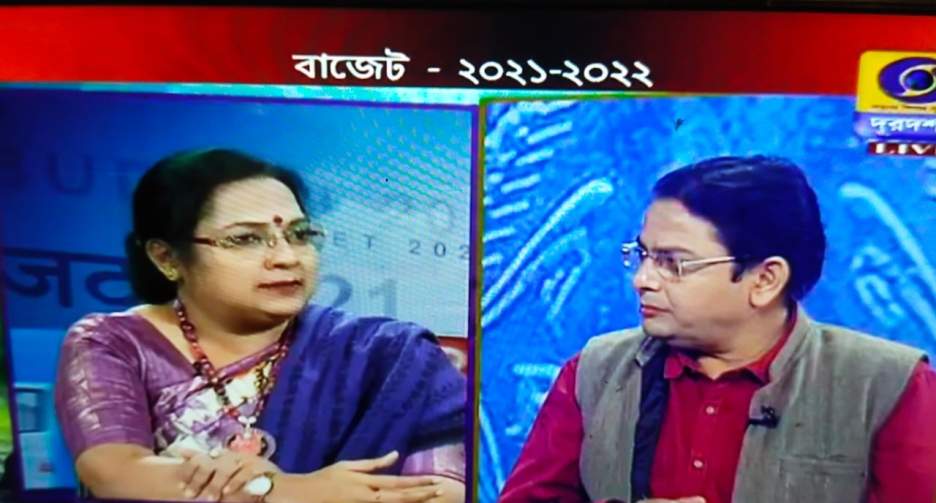
The economic situation around the world is much worse because of the Covid epidemic. Speaking of a self-reliant India in this situation, Hon’ble Finance Minister Nirmala Sitharaman presented the budget on February 1, challenging the country’s economy. On that day, the principal of Vijaygarh Jyotish Roy College Dr. Rajyasri Neogy was present on the program ‘Budget 2021-22’ of Doordarshan channel. Rajyasri Neogy, was Chartered Accountant Shri Surjit Roy, former Professor Jadavpur University Economist Gautam Gupta and Economics Specialist Dr. Aditya Das. The economists present spoke on the budget presented by the finance minister under the pressure of expectations. The first speaker, Aditya Das, said that such a situation had never been seen before in independent India. In this situation, the finance minister had to come up with a budget. Dr. According to Rajyashree Niyogi, efforts are being made to bring back the rate at which the common man has been harmed, to get out of this dire situation. One of his directions may come out of this year’s newly introduced budget. He thinks that if more affordable income is provided for the people then it is very good for the common people. Then Dr. Gupta talks about ‘V Sep Recovery’. Surjit Babu personally said that the budget has been good. He said this budget should not be seen only in terms of 2021-22. The four experts present discussed the issue from all sides. Although there are some problems, there is hope. The future will tell whether the transition of the economy will take place or not, whether it is a sign of good health of the economy with huge collection of GST or not.
According to the new budget, Tk 25,000 crore has been allocated for Bengal, which will be spent on construction and renovation of 75 km of new roads. This includes road repairs from Kolkata to Siliguri. The Finance Minister said Kharagpur-Vijayora, Dunkuni-Gomo freight corridor will be constructed. Prime Minister Narendra Modi has explained the need for extra attention on the railways. In his post-budget speech, he said West Bengal was one of the states in the country that he wanted to build as a business powerhouse of the future. On the other hand, one crore rupees has been allocated for the tea industry, which will help the tea industry in West Bengal and Assam. However, after so much, there is a frustrated part as there is no allocation for the state’s metro project. With this new budget. Rajyashree Niyogi is very optimistic. He thinks a lot of people will benefit from it. Those who have lost their jobs, who have suffered a lot, will find employment again.
No changes have been made to the tax structure in this time’s budget. Has announced special discounts for senior citizens over the age of 65. If you buy a new flat, interest free up to Rs 1.5 lakh till March 31, 2022. In addition, many more concessions have been made in this budget.
Budget means trying to show a direction, budget means trying to build the word of the future. The country and the people of the country are the main target there. People will be looking at how the budget presented by the Hon’ble Finance Minister for 2021-22, based on the survey, will yield results in the future. If all the directions that have been shown in this budget, which have been expressed in the hope that in reality the country will benefit as a result, the people will benefit.








































 Rajrupa Das 3rd Sem (Blog Assignment)