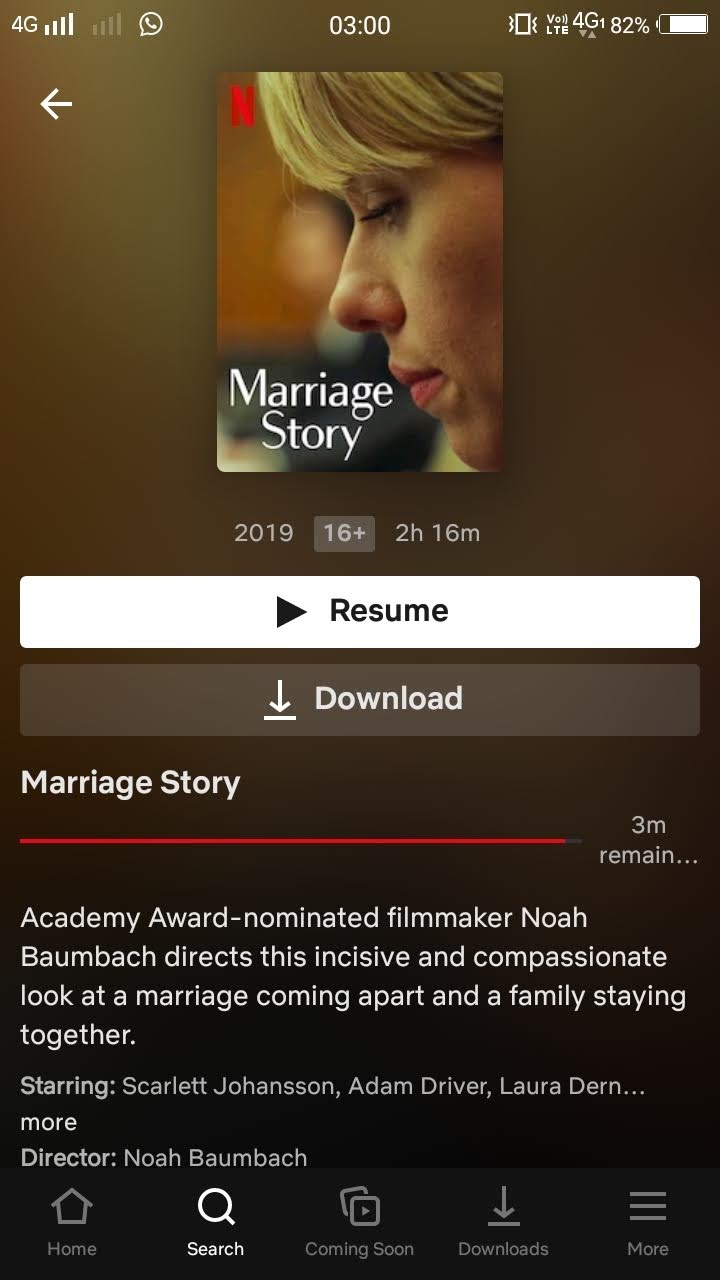
Noah Baumbach’s film, “Marriage Story” isn’t so much a story of a marriage as it is a story of the stories that are told about a marriage as it dies, the role of those stories in the lives of those who are soon to be exes, and, above all, the frameworks that give rise to those stories and prove to be inseparable from their substance. The movie “Marriage Story” shows how the sphere of intimacy is transformed into a malignant poison as soon as the relationship in which it flourished is broken off.

Divorce is described in Noah Baumbach’s masterful “Marriage Story” as like a death without a body. Something has been lost. There is grieving, anger, denial. In his moving story, Baumbach captures the insidious nature of divorce, how two well-meaning people who still care about each other will do things they would never think they would do. Baumbach portrays divorce as a great equalizer, turning us into versions of ourselves we didn’t expect to become.
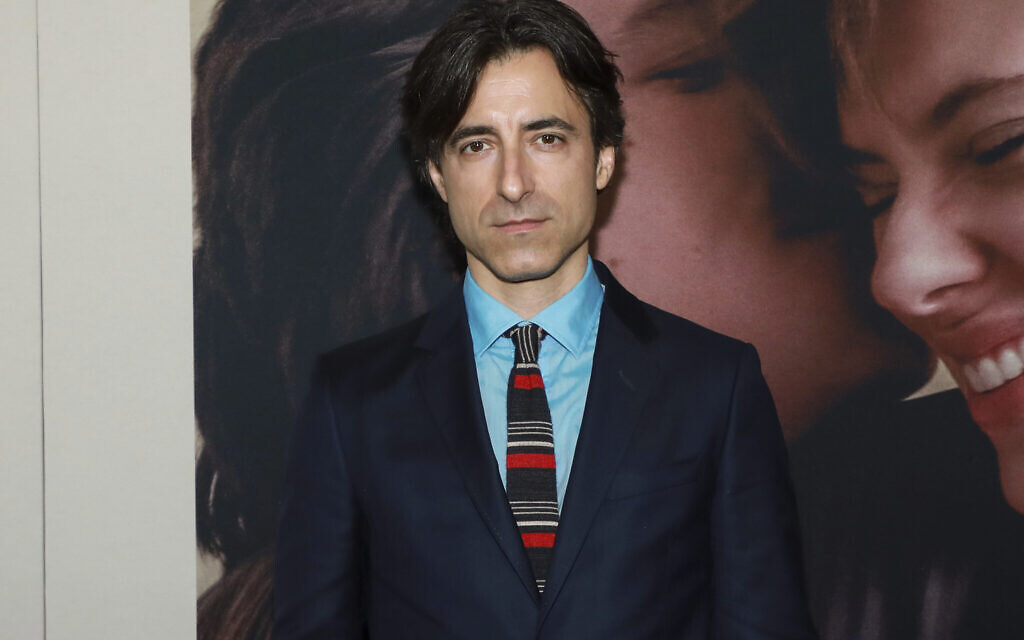
And, despite some surprising bits of humor, this is very much a domestic drama. In effect, the entire movie is one of duelling monologues, spoken and unspoken, two hours of sharp, painful, witty, and elegant talk that is nonetheless rooted in the impossibility of communication. Baumbach presents the elusive nature of love, the ineffable spark at its core and the realm of practicalities by which it’s defined and realized. He testifies to the phrase I heard somwhere by someone I don’t remember I i.e.“There’s no such thing as love, there’s only proof of love.”
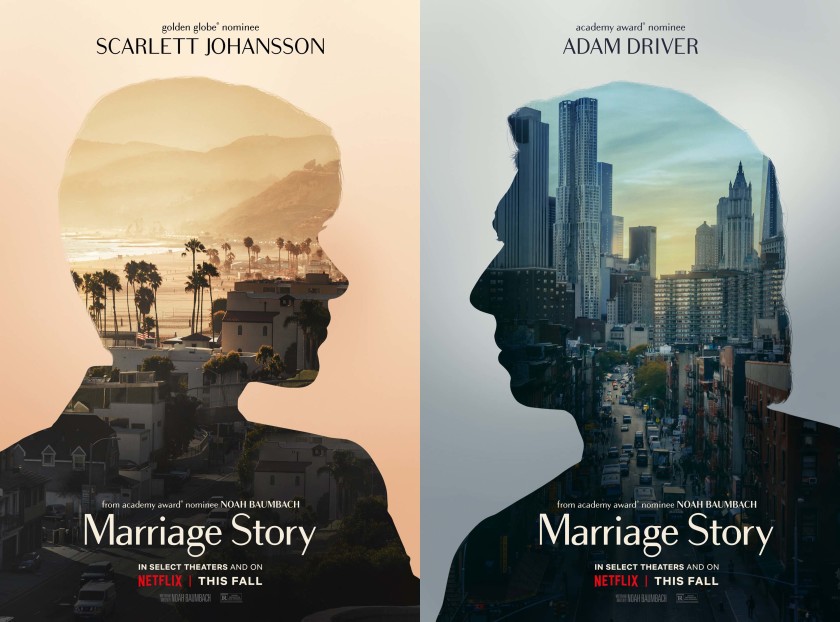
Marriage Story, is a film where thoughts and feelings are articulated so precisely that viewers know exactly what the characters are going through. This film is a searing portrait of a relationship ending. It is insightful, sympathetic and rather beautifully bewildered.
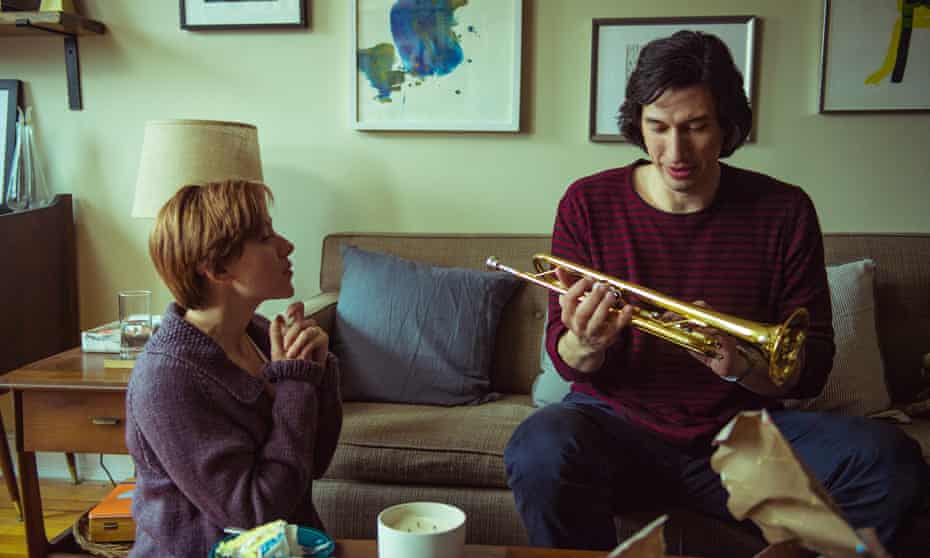
At the centre of it all, however, are a pair of brilliant performances by Scarlett Johansson and Adam Driver, both of whom embrace and inhabit their characters’ flaws and foiblesBoth of them deliver stunning performances. Driver and Johansson portray emotional and complex work very much effortlessly. They’re good throughout, but they each get a “scene” of their own, a background speech from Nicole when she first goes to Nora and a breathtaking one from Charlie at a bar near the end and a scene together, the big fight that we never think will happen with our partners. The one where we say what we shouldn’t say. The one where things change forever. To sum it up Scarlett Johansson and Adam Driver excel as a couple caught in the storm of an increasingly vicious and often hilarious separation in Baumbach’s bittersweet heartbreaker.
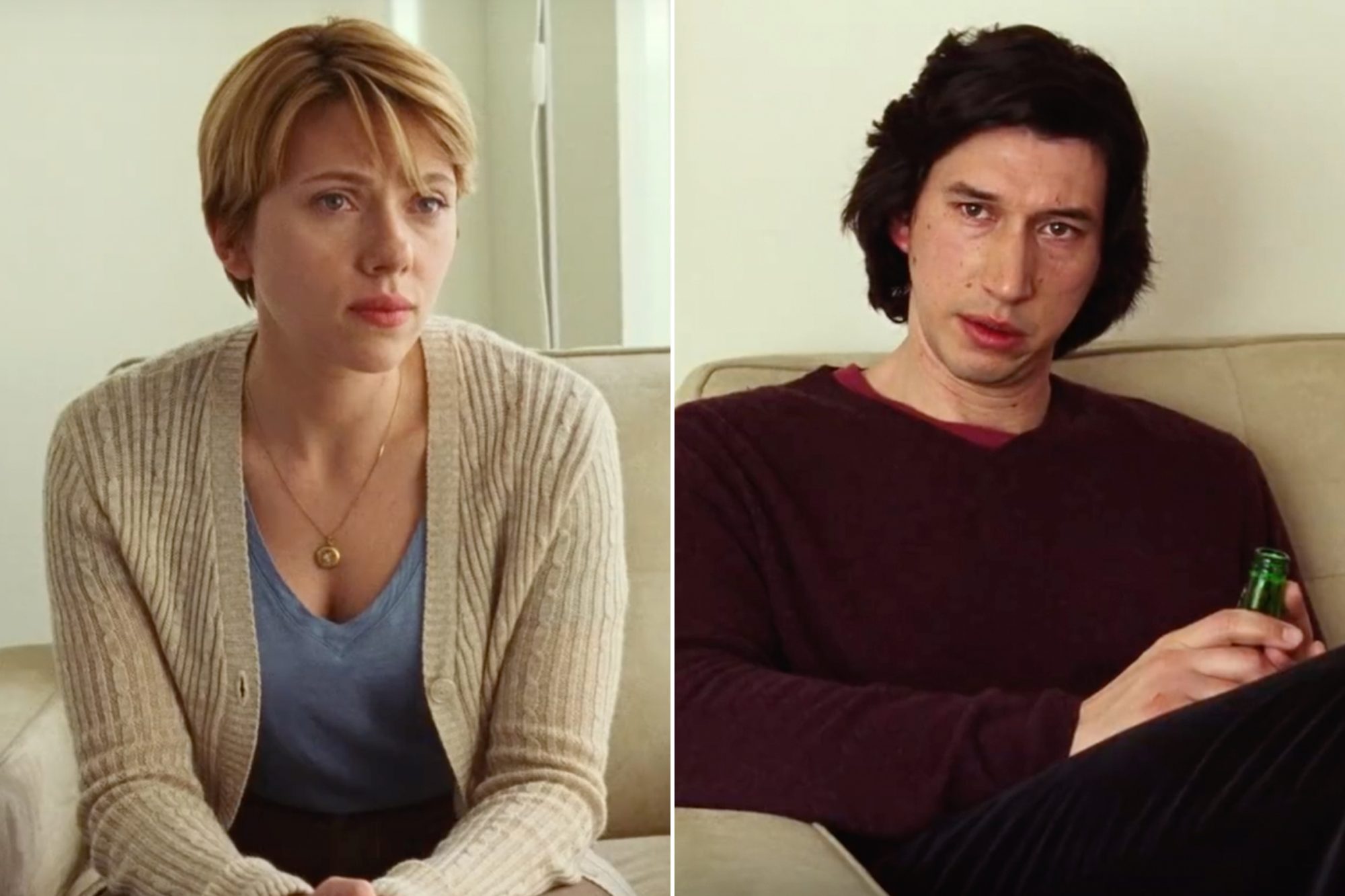
The two leads own the film, but the ensemble cast is quite remarkable too. In the supporting roles, Laura Dern as Nora Fanshaw is superb, Ray Liotta as Jay Marotta kills it as a lawyer operating somewhere between reasonable and crazy, and Alan Alda as Bert Spitz offers a softening influence, perfectly in tune with the ultimately forgiving attitude that lifts this film to a higher level.



The use of tonal montage is very much evident throughout the film which adds to the creation of a beautiful tone and ambience matching to the feel of the situations. When I started watching this film I couldn’t have imagined of a happy ending in such a story but the ending was an absolute pleasant surprise to me.

 Rajrupa Das 3rd Sem (Blog Assignment)